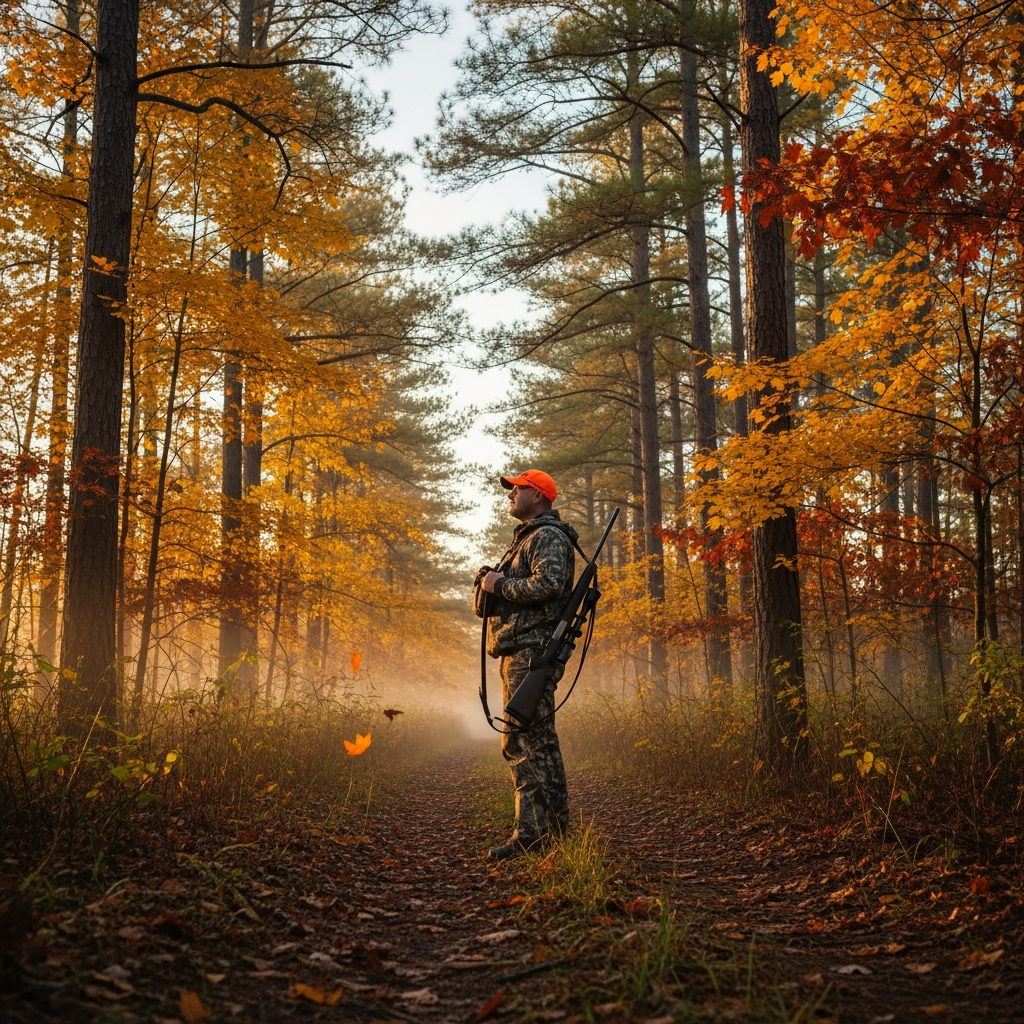
Most hunters think the hunt starts when they climb into their stand.
I used to think that too.
Took me about forty years to realize I was wrong.
Nowadays, by the time I settle into my stand, the hunt's already been going on for the better part of an hour. Truth be told, a lot of hunts are won or lost before your boots ever leave the ground. A mature buck doesn't wait until you're sitting in a tree to decide whether you're dangerous. He's been watching, listening, and smelling everything you did from the minute you parked your truck.
I wish somebody had explained that to me when I first started hunting.
Would've saved me from educating a whole pile of deer.
When I was younger, I figured the quickest way to my stand was the best way. I'd close the truck door, throw my rifle over my shoulder and head straight through the woods. I wasn't trying to be noisy, mind you. I just wanted to get there. Looking back now, I probably sounded like a man late for work instead of somebody trying to fool the sharpest nose God ever put in the woods.
Funny thing is, I still killed deer back then.
Just not the old ones.
Young bucks will forgive a mistake or two every now and then. They've still got a lot to learn. Old bucks didn't get old by overlooking little things. Somewhere along the way they figured out that anything that don't sound, smell, or move right is probably worth avoiding.
My granddaddy wasn't much on giving speeches, but every now and then he'd say something that'd stick with you the rest of your life.
One afternoon he looked at me and said, "Boy, quit worrying so much about where you're sitting and start worrying about how you got there."
I nodded like I understood.
Truth was, I didn't have the slightest idea what he meant.
Years later... I did.
There was a little oak ridge I'd hunted for several seasons. Every November it'd have fresh rubs the size of my forearm and scrapes that looked like somebody had taken a garden rake to the ground. Trail cameras weren't around back then, so you learned to read sign or you stayed home empty-handed.
Every afternoon I'd park in the same spot. Walk the same trail. Cross the same little creek. Climb the same tree.
After about a week I quit seeing deer.
At first I blamed the moon. Then the weather. Then I convinced myself somebody else had slipped in there and shot every buck on the property.
Looking back, I laugh every time I think about it.
Those deer weren't gone. They'd simply figured out that some hardheaded fellow kept walking through their living room every afternoon.
That was the first time it ever dawned on me that deer hunt us just as much as we hunt them. They learn our habits. They know where we park. They know where we walk. They know when something changes.
Once I accepted that, I quit treating the walk to my stand like wasted time. It became part of the hunt. Matter of fact, it became one of the most important parts.
Here's something I learned years ago that nobody ever told me. Walk through the woods like every other critter does. Squirrels don't march through the timber. Turkeys don't either. They'll walk a little ways, stop, look around, listen, then ease on again. Deer do the same thing. These days, when I'm headed to my stand, I'll walk maybe twenty steps or so, then stop for a few seconds. I ain't counting 'em, mind you. I just move through the woods the way the woods move.
I don't know exactly when I started doing that. Maybe I was finally paying attention. Maybe age slowed me down enough that I quit trying to race through the woods.
Either way, I started seeing things I'd walked right past for years. I'd hear squirrels start cutting acorns again after I'd stopped moving. Turkeys would go back to scratching leaves. Sometimes I'd hear a deer feeding somewhere ahead of me because I'd finally gotten quiet enough to let the woods settle back down.
You'd be surprised how much you miss when you're making all the noise.
Wind became another teacher. Lord, I used to think if the weather forecast said the wind was out of the north, then it was blowing north everywhere. That ain't how woods work. A creek bottom has a mind of its own. A pine plantation doesn't act like an oak hammock. A steep ridge changes everything. Cold morning air likes settling downhill. Evening thermals have fooled more hunters than they'll ever admit. I've stood on top of a ridge with the wind hitting me square in the face, then climbed twenty feet down into a hollow and watched milkweed drift behind me.
That'll humble you in a hurry.
Nowadays, if the wind ain't right, I don't care how good my trail camera pictures are or how bad I want to hunt a certain stand. I go somewhere else. Or I stay home. That sounds hard until you realize one bad hunt can educate a mature buck for weeks.
I've got stands I may only hunt three or four times all season. Not because they aren't good. Because they're too good to burn up.
That's another mistake I made when I was younger. I'd find one hot stand and hunt it every chance I got. Monday. Tuesday. Wednesday. Saturday morning. Saturday evening. By the next weekend I'd be scratching my head wondering where all the deer had gone.
Nowadays I look at a good stand like money in the bank. I don't spend it unless the conditions are right. A stand doesn't kill deer. The right wind, the right timing, and the right conditions do.
I've driven all the way to a property before, stepped out of the truck, stood there a minute feeling the wind on my face, and climbed right back in without loading my rifle. Some folks would say I wasted a trip. I say I saved a stand.
The older I get, the less I care about hunting every chance I have and the more I care about hunting when the odds are actually in my favor. That's not getting lazy. That's finally learning.
One thing that took me entirely too long to learn was that getting to your stand ain't the only part that matters. Picking the right stand on the wrong day can be just as bad as picking the wrong stand altogether.
I've got a handful of stands that I dearly love. Every one of them has produced good deer over the years. Every one of them has also sat empty while I drove right past them because something just wasn't right. Twenty-five years ago I'd have climbed up there anyway. Nowadays I know better.
A stand don't kill deer.
Conditions kill deer.
I've heard hunters say, "The wind's close enough." Every time I hear that, I smile because I've said the same thing myself. Problem is, "close enough" usually works just fine on young bucks. It don't work nearly as often on one that's made it five or six seasons.
Old bucks make a living noticing little things. Maybe they don't smell you today. Maybe they just smell where you walked an hour ago. Maybe they don't even know you're there. They just know something ain't right, and that's all it takes to send them around you instead of past you.
I've watched bucks come down the same trail three evenings in a row, then suddenly stop fifty yards short, throw their nose up in the air, and ease off into the thick stuff without me ever laying eyes on them. The only thing that changed was where I'd walked getting to my stand.
That taught me another lesson. The easiest route to your stand usually ain't the best one. Sometimes you've got to walk an extra two hundred yards to keep from crossing where deer feed. Sometimes you've got to circle around a bedding area instead of cutting through it. It takes longer, and it ain't nearly as convenient, but convenience has probably cost more hunters mature bucks than they'll ever know.
I see it every season. A fellow hangs a stand overlooking a beautiful oak flat that's raining white oak acorns. He slips in every afternoon by walking right through the middle of the flat because it's the shortest route. Then he wonders why the trail camera shows bucks there at midnight instead of six o'clock. Well... they didn't quit eating acorns. They just started eating after you left.
One thing I finally quit doing was hunting because my calendar said I should instead of because conditions were right. When I was younger, if Saturday rolled around, I hunted. Didn't matter if it was eighty-three degrees. Didn't matter if the wind was wrong. Didn't matter if I'd hunted that same stand the last four evenings. I was off work, so I was hunting.
Nowadays I'll pour another cup of coffee, step out on the porch, feel that wind on my face, and ask myself one question. "If I were an old buck, would I move this afternoon?" Sometimes the answer's yes. Sometimes I figure he'd be smarter than I am and stay bedded until after dark. When that's the case, I don't mind staying home. That stand will still be there tomorrow. Matter of fact, it'll probably be better tomorrow because I left it alone today.
Pressure is something most hunters don't think about until it's too late. Every time you climb into a stand, you're leaving a little piece of yourself behind. Maybe it's scent. Maybe it's noise. Maybe it's nothing more than deer hearing the same truck door slam every afternoon. It all adds up.
I've got one stand I won't hunt more than twice in a row unless the rut is in full swing. I learned years ago that mature bucks have a funny way of changing their travel routes after they've had enough of you walking through their woods. Could I hunt it every evening? Sure. Would I eventually kill a deer? Probably. But I'd rather hunt it four or five times all season under perfect conditions than twenty times hoping luck bails me out.
That reminds me of a buddy of mine and a hunt I'll never let him forget. We were headed to our stands one afternoon when he turned off the trail toward his spot and needed to answer nature's call. He dropped his drawers, did his business, and as he stood back up to pull his britches up, he looked over and there stood a big ol' eight-point about sixty yards away. He reached down, grabbed his rifle, and shot that buck with his drawers around his ankles, bare rear end and all. Funniest thing he ever told me, and I've told it about a hundred times since.
Funny thing is, that buck didn't care one bit whether my buddy was ready. Deer have a habit of showing up when you least expect them. They'll appear while you're digging through your backpack, taking a drink of coffee, or standing there thinking you've got plenty of time before the hunt starts. Truth is, the hunt had already started. That buck knew it. My buddy didn't.
I guess that's another lesson the woods have a way of teaching. They don't run on our schedule. They never have.
The older I get, the more I enjoy that walk to my stand. I don't look at it as wasted time anymore. I look at it as part of the hunt. Every track crossing the trail tells a little story. Every fresh scrape, every rub, every squirrel barking somewhere ahead, every crow fussing over something in the distance is another clue about what's happening around me. By the time I finally climb into my stand, I don't feel like the hunt's about to begin. I feel like I've already been hunting for the last forty-five minutes. And more times than not, that's exactly what's been happening.
One thing I don't hear many hunters talk about is leaving a stand. Everybody worries about getting in without being seen or smelled, but I've come to believe getting out can be just as important. I've bumped enough deer walking back to the truck over the years to know that daylight ain't the only time you're being watched.
There was a time I'd climb down the minute legal shooting light ended. I'd shine my flashlight toward the truck and head on out, figuring the hunt was over. The hunt wasn't over. Matter of fact, I'd bet I've jumped as many deer leaving a stand as I ever have walking to one.
More than once I've heard that familiar whoosh behind me and watched a white tail disappear through the pines. I'd just stand there shaking my head because I knew exactly what happened. That deer had probably been standing there watching me for the last ten minutes, waiting to see what I was going to do. Old bucks don't get old by being careless. They'll stand in the thick stuff until they're satisfied everything's safe. Sometimes they'll let you walk right past them before easing right back to where they wanted to be in the first place.
That's why I don't like cutting across food plots or feeding areas on my way out if I can help it. If I walked in using one route, I usually leave using the same one. Deer are creatures of habit, and I try not to give them another reason to change theirs.
I've hunted with fellas that wanted to explore every corner of the property after the hunt was over. We'd climb down and they'd say, "Let's go see what's over that ridge." No sir. We'll look another day. The less wandering around I do, the better I sleep that night.
One thing that surprises a lot of people is how often I'll simply sit in my stand after shooting light is over. Not because I'm expecting to shoot a deer — I can't — but because I know deer are starting to move. If I hear them feeding nearby, I'll sometimes give them another ten or fifteen minutes before climbing down. I'd rather let them drift away on their own than walk right through the middle of them. Patience has a funny way of paying dividends you don't notice until later in the season.
Rain changes things too. A light rain can be one of the finest things that ever happened to a hunter. It softens every footstep. Dry oak leaves quit sounding like you're breaking potato chips under your boots. The woods get quieter, and so do you. But don't make the mistake of thinking rain fixes everything. A heavy rain changes the whole woods. Tracks disappear. Blood washes away quicker than you'd like. Creeks rise. Deer shift where they travel. Sometimes they'll get on their feet right after the rain quits because they're ready to feed. Other times they'll stay tucked away until everything settles back down. Like most things in deer hunting, there ain't a rule that works every single time. You just keep paying attention until the woods start making a little more sense.
Cold fronts have always been my favorite. Now I'm no weather expert, and I don't pretend to know everything that gets a deer moving, but I've spent enough Novembers in the woods to know that when the temperature drops and the wind finally gets right, I'd better have my plans made. Some of my favorite afternoons have come after one of those first real cold fronts. The air just feels different. The squirrels seem busier. You find yourself pulling your jacket a little tighter, and for some reason it just feels like something good could happen. Sometimes it does. Sometimes it doesn't. That's hunting.
One thing I've quit doing is chasing every little prediction somebody makes on the internet. Every year there's a new chart, a new moon phase, a new magic formula that's supposed to tell you exactly when the biggest buck in the county is going to walk by your stand. I've never put much faith in that. I'd rather pay attention to what the woods are telling me than what somebody a thousand miles away says deer ought to be doing. The woods right in front of you will teach you more than a hundred videos ever will.
I've also learned not to ignore my gut. Every hunter knows what I'm talking about. Every now and then you walk into a place and something just feels right. The wind's good. The woods are alive. Squirrels are feeding. Birds are carrying on like normal. You don't know why, but you just feel confident. Other days, everything feels dead. You can hunt anyway if you want to. I have. Sometimes you'll still get lucky. But more often than not, I've found those quiet, lifeless woods usually stay that way. That's one reason I don't mind climbing back into the truck if conditions aren't what I hoped they'd be. Some folks call that giving up. I call it saving tomorrow's hunt.
The biggest lesson I've learned after all these years is that mature bucks aren't usually killed by hunters who work the hardest. They're killed by hunters who make the fewest mistakes. That's a mighty big difference. You don't have to outsmart every deer in the woods. You just have to quit helping them out. Every time you make a little less noise, every time you choose the right wind instead of the convenient one, every time you decide to stay out of a stand one more day, you're stacking the odds just a little more in your favor.
Most folks are looking for one big secret that'll suddenly make them a better deer hunter. I reckon there isn't one. It's just a whole bunch of little things done right over and over again. Looking back now, I don't think the best hunters I ever knew were the smartest. They were simply the most patient. And patience starts a whole lot sooner than most folks think. It starts the minute you step out of the truck.
As I've gotten older, I've come to believe the best deer hunters aren't always the ones who spend the most money or own the fanciest equipment. More often than not, they're the ones who pay attention. They notice a fresh track crossing the trail that wasn't there yesterday. They notice where the squirrels are cutting white oak acorns instead of red oaks. They notice that the crows keep fussing in one corner of the property. They notice the wind changing before it changes enough for the deer to notice. Most of all, they notice when something just doesn't feel right.
I've ignored that feeling more times than I care to admit, and nearly every time I did, I ended up wishing I'd listened to it. The woods have a way of talking to you if you'll slow down enough to hear them.
Most folks think woodsmanship is some mysterious gift you're born with. I don't. I think it's paying attention. It's learning something every time you step into the woods, whether you kill a deer or not. I've learned just as much walking back to the truck empty-handed as I ever have dragging a buck out. Matter of fact, some of my best lessons came on days I never fired a shot. Those were the days I started noticing where deer crossed a trail instead of where I thought they ought to cross. Those were the days I realized I'd been looking too far ahead instead of paying attention to what was happening all around me. Those were the days I quit trying to force the woods into doing what I wanted and started letting them show me what they were already doing.
That may sound simple. It is. Simple doesn't always mean easy.
I still make mistakes. I'll still catch myself moving too fast every now and then. I'll still second-guess whether I should've hunted one stand instead of another. That's part of hunting. The day you think you've got deer completely figured out is probably the day an old doe blows at you from twenty yards away and reminds you who really lives out there.
I smile a little when I hear somebody say they've got deer hunting all figured out. No they don't. None of us do. That's one of the reasons I keep coming back every fall. The woods are always teaching. You just have to be willing to be a student.
I sure wish I'd had something like HuntIQ back when I was younger. Not because it would've made me an expert overnight, and certainly not because an app can replace experience — nothing can do that. But there have been plenty of mornings when the Blood Tracker would've helped me see sign I struggled to pick up with tired eyes. The Shot Analyzer would've made me stop and think before pushing a questionable hit too soon. Trail Maker would've saved me a whole lot of wandering around trying to remember where I'd already looked. They're tools. Good tools. But they're still just tools. Good judgment, patience, paying attention to the wind, and learning from your mistakes are things no app can ever replace. Those lessons have to come from time spent in the woods.
If there's one thing I'd like every young hunter to remember, it's this — don't be in such a hurry to get to your stand that you forget to enjoy the walk getting there. Some of my favorite memories don't have a thing to do with the deer I killed. They're about watching the woods wake up before daylight. Listening to a barred owl calling across a creek. Seeing a fox slip through the pines. Watching a little spike chase squirrels away from a white oak like he owned the place. Or simply standing there while the woods came alive around me because I'd finally learned to quit making so much noise. Those are the things you remember years later. The antlers hanging on the wall are nice. The stories are better. And the lessons — those stay with you forever.
An old buck has one job every single day of his life: stay alive. If you remember that while you're walking to your stand, picking your stand, hunting your stand, and leaving your stand, you'll start making decisions the way a mature deer expects you not to. I've hunted long enough to know this much. The hunt doesn't begin when you climb into your stand. It begins the moment your boots hit the ground beside the truck. Walk accordingly.
I guess if there's one thing I hope you take away from an old hunter rambling on about walking to a stand, it's that there aren't many shortcuts in deer hunting. Lord knows I've looked for them. Every hunter has. We all want that one little trick nobody else knows about. The magic call. The perfect scent. The stand that'll produce a wall-hanger every time you climb into it. Truth is, after all these years, I don't think there are many secrets left. There are just good habits. Habits built one hunt at a time.
I've hunted with men who could tell you every ballistic chart ever printed but couldn't tell you which way the wind was blowing. I've hunted with fellows carrying enough equipment to outfit a small army, but they'd slam the truck door hard enough to wake every crow in the county. Then I've hunted with old-timers who carried one faded backpack, an old Thermos full of coffee, and a rifle that looked older than I was. Somehow those old boys always seemed to know where the deer were going to show up. It wasn't luck. It was years of paying attention.
One thing I've noticed over the years is that the best hunters don't spend much time talking while they're walking. They're listening. They're looking. They're smelling the woods just as much as the deer are. You can learn a lot just by stopping long enough to let the woods start talking again. Sometimes you'll hear a squirrel barking at something moving through the timber. Sometimes a crow will tell on a deer before the deer ever knows you're there. Sometimes you'll hear leaves crunching ever so lightly and realize there's a doe feeding fifty yards away. None of that happens if you're stomping through the woods thinking about work, football, or what you're having for supper. The woods deserve your attention. They'll usually reward you for giving it.
One of the biggest mistakes I see young hunters make is believing every hunt has to end with a deer. It doesn't. Some of my favorite afternoons ended with nothing more than watching the sun slip through the pines while a pair of wood ducks flew into the swamp. I've watched fox squirrels chase each other around white oaks for half an hour. I've seen a bobcat sneak through so quietly you'd swear he floated instead of walked. I've watched a barred owl land twenty feet away and stare at me like I was the strange one. Those are hunts too. Matter of fact, I think if you only enjoy hunting when you're dragging a buck out, you're missing half the reason most of us fell in love with these woods to begin with.
The older I get, the more thankful I am just to be there. Maybe that's age talking. Maybe it's wisdom. Maybe it's both. I still get excited when I see a good buck. I reckon I always will. But I don't feel like I have to kill one every time I go hunting anymore. Sometimes just spending an afternoon where the only sounds are squirrels cutting acorns and the wind easing through the pines is enough. Funny thing is, that's usually when the biggest buck decides to show up. I don't know if deer have a sense of humor, but they've sure got a knack for reminding us we aren't nearly as smart as we think we are.
If I could sit down with every young hunter just getting started, I'd probably tell him the same thing my granddaddy spent years trying to teach me. Slow down. You ain't in a race. The deer have lived out there every day of their lives. You're the visitor. Act like it. Respect the woods. Respect the deer. Pay attention to the little things. Don't hunt a stand just because you can. Don't force a hunt because it's your only day off. Walk like every other critter in the woods walks. Listen more than you talk. And never stop learning. The day you think you've figured deer hunting out is the day an old doe is liable to blow at you from thirty yards away and remind you who's really in charge.
I've been blessed to spend most of my life chasing whitetails. I've hunted in pouring rain, bitter cold, blistering Florida heat, and mornings so still you could hear an acorn hit the ground a hundred yards away. Every season taught me something. Some lessons came easy. Most didn't. But every one of them made me a better hunter. If this old article saves one fellow from blowing a stand because he hunted it one day too many, or helps somebody realize the hunt starts long before he climbs into his stand, then I'd say it was worth writing. Because that's how good hunters are made. Not all at once. One lesson, one hunt, one season at a time.
If you want to keep reading, there are a few guides that go hand in hand with everything above. What to do when the blood trail stops picks up exactly where the walk ends — when the shot is taken and the hard work begins. How long to wait after shooting a deer covers the patience question from a different angle, with specifics on hit location and timing. How deer react after the shot gives you something to watch for while you're still in that stand. And if conditions ever turn on you — rain, wind, darkness — tracking in rain, wind, and darkness is worth reading before you need it.