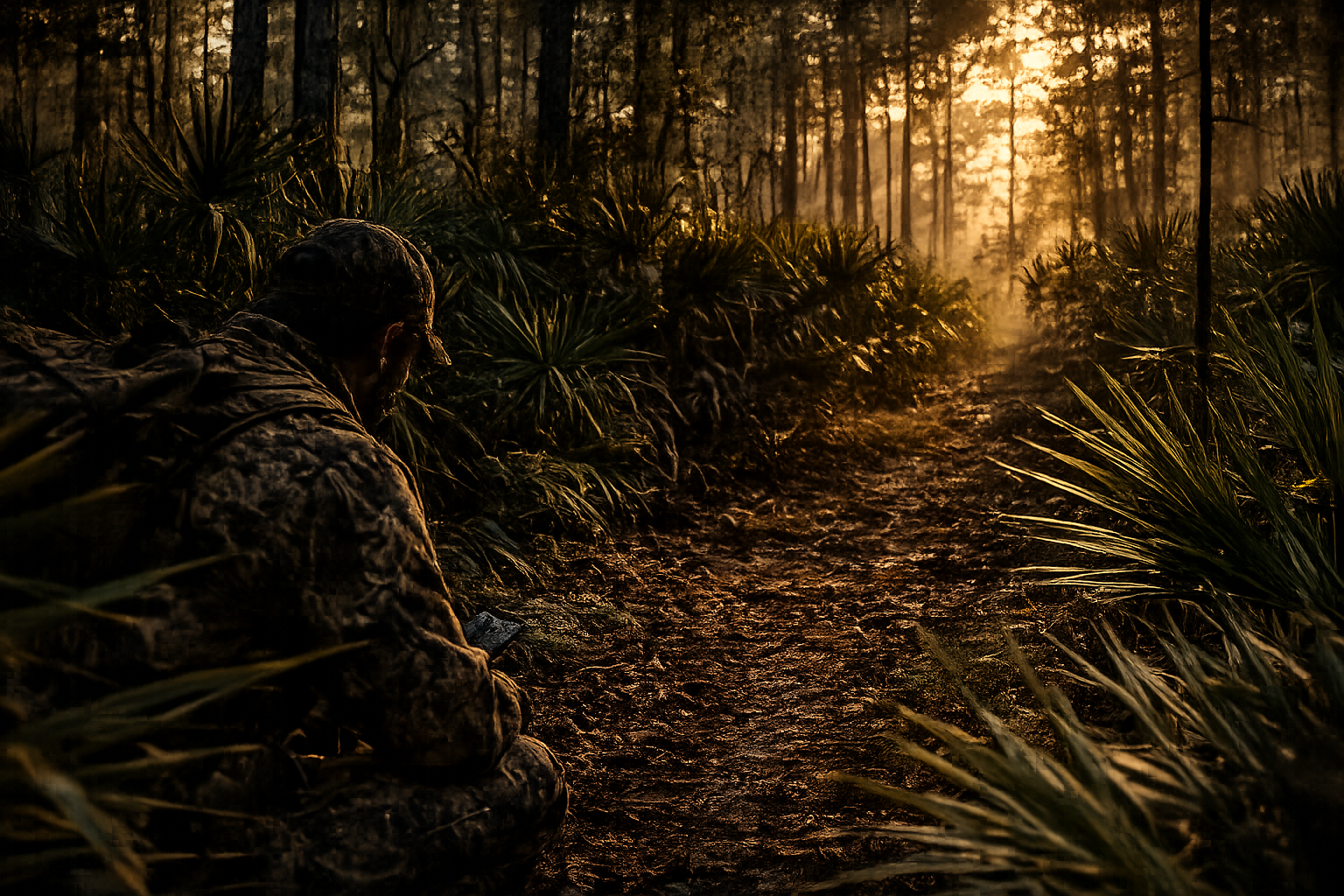
After releasing an arrow or firing a shot, remain quiet and watch the deer for as long as possible. Pay attention to where the deer was standing, the direction it traveled and the last place you saw it.
Do not immediately climb down or walk to the hit location unless there is an urgent safety reason. Sudden movement, talking or unnecessary noise can push a wounded deer farther.
The Most Important Rule: Do Not Rush the Recovery
Many deer are lost because the hunter starts tracking before the animal has had enough time to bed down and expire.
A deer that reaches its first bed without being disturbed may remain there. A deer that is pushed from that bed can travel a considerable distance, cross property lines or enter terrain that is much harder to search.
When the hit location is uncertain, backing out is often safer than pushing forward.
Suggested Wait Times by Suspected Hit Location
The following time ranges are general field guidance only. Actual conditions can vary based on shot angle, weapon, penetration, deer movement and the hunter's ability to identify the hit.
Heart or Major Artery Hit
Suggested wait: 20 to 30 minutes
A heart or major artery hit often causes rapid blood loss. The deer may run hard for a short distance before collapsing.
Possible signs include:
- Bright red blood
- Heavy blood flow
- Blood sprayed on vegetation
- A strong initial blood trail
- A hard sprint immediately after the shot
Even when the hit appears excellent, wait briefly, remain quiet and mark the last place you saw the deer.
Double-Lung Hit
Suggested wait: 30 to 60 minutes
A double-lung hit is normally highly lethal, but the deer may still cover some distance.
Possible signs include:
- Bright red or pink blood
- Bubbles or froth in the blood
- Blood on both sides of the trail when there is complete pass-through
- A hard run followed by weakening movement
Avoid following immediately unless you clearly watched the deer fall.
Single-Lung Hit
Suggested wait: At least 4 hours, and possibly longer
A single-lung hit can be difficult to identify and may not produce the same result as a double-lung hit.
Possible signs include:
- Pink or red blood
- Limited blood
- Blood that becomes weaker
- A deer that continues moving strongly
- An uncertain shot angle or limited penetration
Do not assume that all pink or frothy blood guarantees a double-lung hit.
Liver Hit
Suggested wait: 4 to 6 hours
A liver-hit deer may initially travel farther than expected, then bed down.
Possible signs include:
- Dark red or maroon blood
- Moderate blood that may slowly weaken
- A hunched posture
- Slow or unsteady movement
- The deer walking away rather than sprinting continuously
Pushing a liver-hit deer too soon can greatly complicate the recovery.
Stomach or Intestinal Hit
Suggested wait: 8 to 12 hours, when conditions safely allow
A stomach or intestinal hit requires patience.
Possible signs include:
- Green, brown or foul-smelling material
- Limited blood
- Watery fluid
- Coarse hair
- A hunched or slow-moving deer
- An arrow with stomach contents or digestive odor
Back out quietly and avoid contaminating or disturbing the trail. Weather, temperature, rain, predators and legal tracking hours must also be considered.
Muscle Hit
Suggested wait: Assess carefully before continuing
A muscle hit can produce substantial blood at first and then fade rapidly.
Possible signs include:
- Bright red blood without bubbles
- Heavy initial blood that suddenly weakens
- Long muscle hair
- A deer that continues running strongly
- No sign of bedding nearby
A muscle hit does not always mean the deer is unrecoverable, but the hunter should avoid assuming that heavy early blood guarantees a vital hit.
Shoulder or Heavy Bone Hit
Suggested wait: Back out and evaluate all evidence
A shoulder hit may stop an arrow, reduce penetration or create misleading blood.
Possible signs include:
- Bone fragments
- Limited penetration
- Grease, fat or light-colored tissue
- An arrow without complete pass-through
- Blood that disappears quickly
- A deer leaving with strong leg movement
Do not keep following only because the initial blood appears promising. Reassess the shot angle and penetration.
Watch the Deer's Reaction
The deer's reaction can provide useful clues, but no reaction should be treated as absolute proof of a specific hit. Combine the reaction with the blood, hair and shot location.
Hard Sprint
A hard sprint can happen after a heart, lung, muscle or shoulder hit.
Hunched Posture
A hunched posture may indicate a liver, stomach or intestinal hit.
High Kick
A high rear-leg kick is often associated with a chest hit, but it is not reliable enough to determine the exact organ struck.
Slow Walk or Stagger
Slow movement, weakness or staggering may indicate serious internal injury.
Normal-Looking Escape
Some well-hit deer show very little visible reaction. Do not assume a miss only because the deer did not react dramatically.
Examine the Hit Site Carefully
When enough time has passed to approach the hit location, search carefully for:
- Blood
- Hair
- Bone
- Tissue
- Stomach contents
- The arrow or bullet impact
- Tracks
- Broken vegetation
- The direction of travel
Mark the exact hit location and every confirmed blood spot. Do not walk directly on top of the trail. Stay slightly to one side so the evidence is not disturbed.
What the Blood May Tell You
Blood color can help, but color alone cannot confirm the exact hit.
Bright Red Blood
Bright red blood may come from arteries, muscle or oxygenated tissue.
Pink or Frothy Blood
Pink or frothy blood may indicate a lung hit, especially when combined with good penetration and consistent blood.
Dark Red or Maroon Blood
Dark red or maroon blood may indicate liver or other internal bleeding.
Green or Brown Material
Green or brown matter, digestive odor or stomach contents may indicate a stomach or intestinal hit.
Very Little Blood
A light blood trail does not always mean a poor hit. Fat, hide, hair or internal bleeding can reduce visible blood on the ground.
Weather Changes the Decision
Weather should always be part of the recovery plan.
Warm Weather
Warm temperatures can increase concern about meat spoilage. However, rushing a questionable hit can still cause the deer to travel farther. The hunter must balance recovery time, temperature, shot evidence and the likelihood of pushing the deer.
Rain
Rain can wash away blood and make tracking much harder. When rain is approaching, document the hit location, direction of travel and visible sign as quickly and carefully as conditions allow. Do not use approaching rain as an excuse to blindly rush a suspected liver or stomach hit.
Wind
Wind can help with scent control but can also move leaves and vegetation, making small blood spots harder to locate.
Darkness
Tracking after dark increases the chance of overlooking blood, losing direction or entering unsafe terrain. Use appropriate lighting, carry navigation tools and understand local hunting regulations.
When to Back Out
Back out when:
- The hit location is uncertain
- Blood is dark, sparse or mixed with digestive matter
- The deer is found alive in a bed
- The blood trail becomes stronger near a bed and then leaves quickly
- You believe the deer was pushed
- The deer continues moving strongly
- You need additional help or a tracking dog
- Conditions are becoming unsafe
Backing out is not giving up. It is often the best recovery decision.
When to Consider a Tracking Dog
Consider contacting a legal deer-tracking dog team when:
- The blood trail disappears
- The deer was pushed
- The hit location is uncertain
- The trail crosses difficult terrain
- Rain is expected
- The deer crosses a property boundary
- You find beds but cannot locate the deer
- You suspect a recoverable deer but cannot maintain the trail
Check state and local regulations before using a tracking dog.
Use HuntIQ's Shot Analyzer Before Tracking
The hardest part of deer recovery is often deciding whether to wait or begin tracking. HuntIQ's Shot Analyzer lets the hunter select the estimated hit location and receive immediate guidance that includes:
- Recommended wait time
- Expected deer behavior
- Shot assessment
- Recovery guidance
- Information to consider before beginning the trail
The hunter does not need to search through a long article while standing in the woods. The Shot Analyzer is designed to provide the important answer quickly.
Final Recovery Checklist
Before taking up the trail:
- Mark where the deer was standing.
- Mark the last place you saw it.
- Replay the shot in your mind.
- Consider the shot angle.
- Check the arrow or impact area.
- Identify blood, hair and other evidence.
- Estimate the likely hit location.
- Check the weather and temperature.
- Decide whether to wait or begin tracking.
- Use HuntIQ's Shot Analyzer when you need fast field guidance.
Patience after the shot is not wasted time. It is part of the recovery.
Stop Guessing After the Shot
HuntIQ's Shot Analyzer lets you select the estimated hit location and immediately receive the recommended wait time, expected deer behavior, shot assessment and recovery guidance.
Use the HuntIQ Shot AnalyzerWhen the Blood Trail Gets Hard to See
HuntIQ's Blood Tracker uses your phone camera to help highlight small blood spots that may be difficult to see naturally.
Try HuntIQ Free for 14 Days