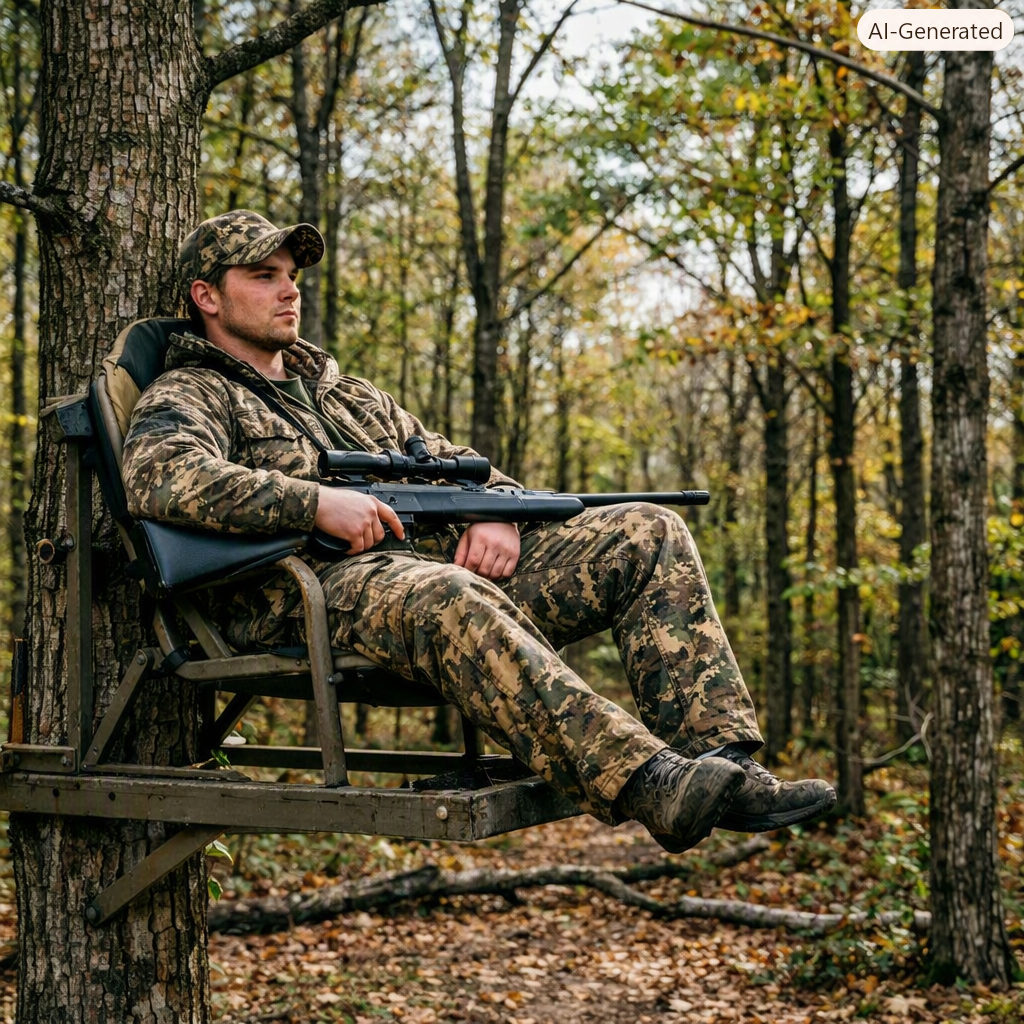
Now listen here, friend. I've been huntin' deer longer than most folks have been alive, and I've heard every excuse a man can make for why he didn't see a buck. "They went nocturnal," he'll say, kickin' dirt like the deer personally offended him. But I'm gonna tell you somethin' straight, and you can carve this into the nearest cypress tree if you want: deer don't go nocturnal — they go smart.
They go quiet. They go cautious. They go where you ain't. And they do it with a kind of wisdom that only comes from livin' every day with somethin' tryin' to eat 'em, chase 'em, or shoot 'em. Deer don't get the luxury of bein' dumb. Not if they want to see tomorrow.
Now I've hunted Florida swamps so thick you could lose a grown man in 'em. I've hunted pine ridges in Georgia, soybean fields in Kentucky, and cold hardwoods up in the Midwest. And I'm tellin' you right now — bucks behave the same everywhere. The land changes, the weather changes, the predators change, but the deer don't. They're built from the same blueprint, whether they're standin' in knee-deep water in the Ocala forest or walkin' a frosty ridge in Wisconsin.
So let's start at the beginning — the real reason deer seem to go nocturnal, even when they ain't. And I'm gonna break it down the way an old woodsman explains things: simple, honest, and backed by more real-world experience than any fancy study.
Crepuscular by Design — The Truth About Deer Movement
First thing you gotta understand is this: deer are crepuscular. That means they're most active at dawn and dusk. Not midnight. Not noon. Dawn and dusk. God built 'em that way.
Now why's that? Well, it's simple biology. A deer's eyes are packed with rod cells — the kind that pick up movement and contrast better than color. They see best in low light. Not pitch black, not bright sun — low light. That's why they move when the sky's gray and the shadows are long.
But here's where hunters get confused. They sit in a stand at daylight, stomp around, cough, clank their rifle, and then wonder why deer ain't walkin' out in front of 'em. Deer didn't go nocturnal — they went deeper. They moved fifty yards into thicker cover. They shifted their daylight route. They adjusted to you.
And Florida deer? Lord have mercy. Those deer are born nervous. Between hog hunters, hikers, swamp folks, airboats, and every critter that wants a bite of 'em, they live in a constant state of "who's tryin' to kill me today?"
So yeah, they move at dawn and dusk — but if you're sloppy, they'll move where you ain't.
Human Pressure — The Real Reason Deer Change Their Patterns
Now let me tell you somethin' I've learned after fifty-plus years in the woods: a buck remembers danger like a man remembers his first heartbreak. You spook him once, he'll forgive you. You spook him twice, he'll change zip codes.
Pressure is the number one reason deer seem to go nocturnal. Not moon phases. Not weather. Not magic. Pressure.
Here's what pressure does to a buck:
- He moves later or earlier.
- He shifts his bedding area.
- He travels shorter daylight routes.
- He uses thicker cover.
- He relies more on wind and scent.
- He avoids open ground.
- He watches his backtrail.
And here's the kicker — he'll do all that after one bad encounter. You bump a mature buck once, he'll change his pattern for days. You bump him twice, he'll change it for weeks. You bump him three times, you might as well take up golf.
Now I've seen Florida bucks that won't step foot in a food plot after daylight from October to January. They'll hit it at 2 AM, 3 AM, 4 AM — but never when the sun's up. Why? Because they've learned that daylight means danger.
And that's the thing — deer don't go nocturnal. They go safe.
Wind, Sound, and Smell — The Deer's Invisible World
Now here's where the science comes in, and I'm gonna explain it the way a man who's lived in the woods his whole life explains things.
Deer live in a world of invisible information. The wind tells 'em everything. Sound confirms it. Smell seals the deal.
They bed with the wind at their back and a visual barrier in front. That way they can smell danger behind 'em and see danger ahead. It's the perfect setup — and they've been doin' it since long before you or I were born.
Florida deer especially rely on wind because thick swamp cover limits visibility. They trust their nose more than their eyes. They trust their ears more than their eyes. Their eyes are good — but their nose is perfect.
And here's the part most hunters don't understand: a deer can smell you even if you don't smell yourself. You can shower, spray down, wash your clothes, and still leave scent behind. Human scent molecules stick to everything — boots, gloves, hats, stands, ladders, ropes, backpacks.
And a deer can smell 'em all.
So when you walk into the woods at daylight, you're leavin' a trail of danger behind you. And deer respond by movin' when your scent is weakest — usually late at night or early in the morning before you arrive.
That's why they seem nocturnal. They ain't. They're just avoidin' you.
The Rut: Controlled Chaos
Now if you really want to understand why bucks act the way they do, you gotta understand the rut. The rut is the closest thing to chaos you'll ever see in the woods. It's like takin' a calm, collected animal and replacin' his brain with a blender.
But even in the middle of all that madness, bucks ain't stupid. They're reckless, sure. They're bold, absolutely. But they ain't dumb. Every move they make is still tied to biology, instinct, and survival — even if it looks like they've lost their minds.
Let's break it down the way a man who's watched fifty ruts unfold explains it.
Pre-Rut: The Quiet Build-Up
Pre-rut is like the warm-up before the fight. Bucks start layin' sign — rubs, scrapes, tracks — but they ain't fully committed yet. They're testin' the waters. They're scent-checkin' does. They're movin' more, but not wide open.
Now here's the thing most hunters miss: pre-rut movement is predictable. Bucks run the same loops, check the same scrapes, hit the same edges. They're creatures of habit — until pressure hits.
One wrong wind, one clank of metal, one whiff of human scent, and that predictable pattern becomes a ghost trail. Bucks don't stop movin' — they just stop movin' where you expect 'em.
Florida bucks especially get cagey in pre-rut. The heat's still hangin' around, the bugs are still bitin', and the cover is thick. They'll move, but they'll do it in the shadows — creek bottoms, palmetto flats, swamp edges, anywhere they can stay cool and hidden.
Peak Rut: When Bucks Lose Their Minds
Now peak rut? Lord have mercy. This is when you see things that make you question a buck's sanity. I've seen bucks run across open fields at noon like they were late for church. I've seen 'em chase does across roads, through yards, and straight past hunters who couldn't believe their eyes.
But here's the truth — even in peak rut, bucks ain't truly reckless. They're driven. They're focused. Their biology is screamin' at 'em to breed, and that overrides everything else.
But they still use wind. They still use cover. They still avoid danger zones — unless a hot doe drags 'em through it.
And here's the part most hunters don't realize: midday movement during peak rut is real. I've killed more mature bucks between 10 AM and 2 PM during peak rut than any other time of day. When does bed down, bucks cruise. They scent-check bedding areas. They run ridges. They slip through funnels.
Florida bucks do the same thing — they just do it in thicker cover. They'll run creek edges, swamp fingers, hammocks, and palmetto islands. You won't see 'em unless you're huntin' tight to cover.
Post-Rut: The Vanishing Act
After the rut, bucks disappear like a man who owes child support. They're worn out, beat up, hungry, and cautious. They slide back into thick cover and move mostly at low light.
But here's the thing — they ain't nocturnal. They're recoverin'. They're rebuildin' strength. They're avoidin' pressure. They're findin' food. And they're doin' it in places hunters rarely look.
Post-rut bucks love:
- Thick bedding cover
- Swamp edges
- Cutovers
- Hammocks
- Creek bottoms
- Thermal cover
They'll move in daylight — but only where they feel safe. And if you ain't huntin' tight to that cover, you'll swear they vanished.
Seasonal Shifts — How Weather Changes Everything
Now let's talk about weather, because weather changes deer movement more than most folks realize. And I ain't talkin' about magic moon phases or old wives' tales — I'm talkin' about real, biological responses.
Heat
Heat shuts deer down. Period. Florida hunters know this better than anyone. When it's 85 degrees in November, deer ain't walkin' around in the sun. They're bedded in shade, near water, in places where the temperature drops even a few degrees.
Cold Fronts
Cold fronts are the best thing that can happen to a hunter. When temperatures drop suddenly, deer move earlier, move longer, and move farther. Their metabolism spikes. Their feeding increases. Their daylight movement expands.
Rain
Light rain? Deer love it. It quiets the woods, cools the air, and washes away scent. Heavy rain? They hunker down. But the moment it stops — they move.
Wind
Wind is the most misunderstood factor in deer hunting. Deer don't avoid wind — they use it. They travel with the wind in their face. They bed with the wind at their back. They position themselves so they can smell danger before they see it.
Florida deer especially rely on wind because thick cover limits visibility. They trust their nose more than their eyes.
Bedding Strategy — The Heart of Deer Behavior
If you want to understand deer, you gotta understand bedding. Bedding is the center of a buck's world. Everything he does — feeding, traveling, rutting — revolves around where he beds.
And here's the thing — bucks don't bed randomly. They bed with purpose. They bed with strategy. They bed with survival in mind.
Here's what a buck looks for in a bedding area:
- Wind advantage — wind at his back, sight in front
- Cover — thick enough to hide, open enough to escape
- Thermal stability — cooler in summer, warmer in winter
- Escape routes — multiple exits
- Low human intrusion
Florida bucks bed in places most hunters won't go — swamp islands, palmetto flats, cypress knees, hammocks, and thick edges. Northern bucks bed on ridges, points, benches, and cuts.
Different terrain — same strategy.
Travel Corridors — The Highways Bucks Use
If you want to kill mature bucks, you gotta stop huntin' where you want them to be and start huntin' where they actually travel. Bucks don't wander around randomly. They move through the woods like water — takin' the safest, quietest, most concealed path from one place to another.
These paths are called travel corridors, and once you learn how to find 'em, you'll start seein' deer you never knew existed.
Now here's the thing — travel corridors look different depending on where you're huntin', but the principles never change.
Florida Travel Corridors
Florida deer use:
- Swamp edges
- Creek fingers
- Palmetto tunnels
- Hammock transitions
- Cypress lines
- Dry ridges inside wet terrain
They move through places where they can slip through quietly, stay shaded, and stay hidden. Florida deer don't like open ground — they're swamp ghosts. They hug edges like it's religion.
Midwestern Travel Corridors
Midwestern bucks use:
- Ridge tops
- Benches
- Field edges
- Creek bottoms
- Fence lines
- Cutover edges
Different terrain — same strategy. Bucks move where they feel safe, where they can scent-check does, and where they can escape fast.
Pressure Zones — The Places Bucks Avoid
Now let's talk about somethin' most hunters never think about: pressure zones. These are areas deer avoid because humans use 'em too much.
And here's the thing — you don't have to shoot at a deer to create pressure. You just have to exist in their world.
Pressure comes from:
- Boot tracks
- Scent trails
- ATV noise
- Truck parking
- Trail cameras
- Feeders
- Stands
- Human patterns
Deer learn your habits faster than you learn theirs. You walk the same trail to your stand? They know it. You park in the same spot? They know it. You check your camera every Saturday morning? They know it.
And once they know it, they avoid it — especially mature bucks.
Florida deer are masters at avoidin' pressure. They'll move fifty yards into thicker cover and live there all season. They'll shift bedding areas. They'll change travel routes. They'll move at different times.
They ain't nocturnal — they're patterning you.
Learned Behavior — Deer Remember Everything
Now here's somethin' most folks don't realize: deer remember danger for years. Not days. Not weeks. Years.
You bump a mature buck once, he'll forgive you. You bump him twice, he'll avoid you. You bump him three times, he'll move to a new county.
I've watched bucks change their entire home range because of one bad encounter. I've watched 'em abandon food plots, avoid roads, and stop usin' trails they've used for years.
And here's the kicker — deer don't just remember you. They remember:
- Smells
- Sounds
- Patterns
- Locations
- Times of day
- Weather conditions
They remember the smell of diesel. They remember the sound of a climber stand. They remember the clank of metal. They remember the scent of rubber boots. They remember the smell of human sweat.
And they respond by movin' when those things ain't present — usually late at night or early in the morning.
That's why they seem nocturnal. They ain't. They're just avoidin' danger they remember.
Why Bucks Vanish — The Real Reasons
Now let's talk about the part that frustrates hunters more than anything — when bucks vanish. You get trail cam pictures all summer. You see 'em in velvet. You watch 'em grow. You get excited.
Then October hits and they disappear like smoke.
But here's the truth — bucks don't vanish. They shift. They adjust. They relocate. And they do it for reasons that make perfect sense once you understand their world.
Reason #1: Pressure
Pressure is the number one reason bucks disappear. Hunters show up. Trucks show up. ATVs show up. Scent shows up. Noise shows up. Bucks respond by movin' to safer areas.
Reason #2: Food Changes
Food sources shift in fall. Acorns drop. Browse changes. Agricultural fields get harvested. Bucks move to wherever the best food is.
Reason #3: Bedding Changes
Leaf cover changes. Thermal cover changes. Bucks shift bedding areas to stay hidden and comfortable.
Reason #4: Rut Patterns
Bucks start travelin' wider loops to scent-check does. They leave their summer range and move into rut range.
Reason #5: Water
In Florida, water levels change constantly. Bucks move to higher or lower ground depending on swamp conditions.
How to Hunt Bucks When They Seem Nocturnal
Now here's the part you've been waitin' for — how to kill bucks when they seem nocturnal. And I'm gonna tell you straight: you don't hunt nocturnal deer. You hunt daylight opportunities.
Here's how:
- Hunt edges — bedding edges, swamp edges, transition zones.
- Use wind like a weapon — hunt where deer expect wind advantage.
- Slip in quiet — noise kills hunts faster than scent.
- Stay longer — midday movement is real.
- Rotate stands — don't burn out one spot.
- Hunt cold fronts — movement spikes.
- Hunt fresh sign — rubs, scrapes, tracks.
- Hunt thick cover — mature bucks live where you hate walkin'.
Do all that, and you'll start seein' bucks when everyone else swears they went nocturnal.
Hunt Smarter with HuntIQ
Use the HuntIQ Trail Maker to record your outgoing and return routes, log stand locations, and retrace successful paths season after season. When you finally connect on that nocturnal buck, the Blood Tracker helps you follow a tough blood trail home. Subscribe for $4.99 per month and get the full toolkit.
Try HuntIQ Free for 14 DaysThe Sensory World of a Buck — Seeing What We Can't
Now I want to take you deeper into a buck's world — deeper than most hunters ever think about. Because if you want to understand why deer seem nocturnal, you gotta understand how they experience the woods.
A buck's senses ain't just better than ours — they're built for survival in ways we can barely imagine. And once you understand that, you'll stop wonderin' why they avoid daylight danger and start realizin' how they stay alive.
The Nose — A Buck's Superpower
Let me tell you somethin' straight: a buck's nose is the most powerful survival tool in the woods. It's better than his eyes, better than his ears, better than his instincts. His nose is his world.
A deer can smell you even if you don't smell yourself. You can shower, spray down, wash your clothes, and still leave scent behind. Human scent molecules stick to everything — boots, gloves, hats, stands, ladders, ropes, backpacks.
And a deer can smell 'em all.
They can smell danger on the wind long before they ever see it. They can smell where you walked hours ago. They can smell where you touched a branch. They can smell your breath, your sweat, your gear, your truck exhaust.
And here's the kicker — they can smell patterns. They know when scent shows up regularly. They know when scent is fresh. They know when scent is old. They know when scent is dangerous.
That's why they move when your scent is weakest — usually late at night or early in the morning.
They ain't nocturnal. They're avoidin' your scent.
The Ears — The Woods Are Never Quiet
Now let's talk about a buck's ears. A deer can hear things you don't even know you're makin'. The woods ain't quiet — not to a deer. Every step you take, every breath you draw, every click of metal, every whisper of fabric — they hear it.
And they don't just hear it — they interpret it. They know the difference between a squirrel, a hog, a turkey, a bear, and a human. They know the rhythm of danger.
Florida deer especially rely on sound because thick cover limits visibility. They hear you long before they see you. And once they hear you, they adjust their movement.
That's why they move at night — not because they're nocturnal, but because night is quieter. Night is safer. Night is predictable.
The Eyes — Built for Low Light
Now here's the part most hunters misunderstand — deer don't see well in bright daylight. Their eyes are built for low light. They see best at dawn and dusk. They see movement better than detail. They see contrast better than color.
So when the sun's high and shadows are sharp, deer ain't comfortable. They're exposed. They're vulnerable. They're easier to spot. They're easier to shoot.
That's why they move in low light — not because they're nocturnal, but because their eyes are built for it.
Terrain Dictates Behavior — Florida vs. Everywhere Else
Now let's talk about terrain, because terrain changes everything. A buck in Florida behaves different than a buck in Iowa — not because he's a different animal, but because he's livin' in a different world.
Florida Terrain
Florida deer live in:
- Swamps
- Palmetto flats
- Cypress knees
- Hammocks
- Thick brush
- Wet ground
They move like ghosts. They slip through cover. They hug edges. They avoid open ground. They use water as protection. They bed in places most hunters won't go.
Florida deer ain't nocturnal — they're hidden.
Midwestern Terrain
Midwestern deer live in:
- Hardwood ridges
- Crop fields
- Creek bottoms
- Cutovers
- Rolling hills
They move more openly. They travel ridges. They cross fields. They use terrain features like funnels and pinch points.
Midwestern deer ain't nocturnal — they're visible.
Mountain Terrain
Mountain deer live in:
- Steep ridges
- Benches
- Thermal tunnels
- High bedding points
They move vertically. They use thermals. They bed high and feed low.
Mountain deer ain't nocturnal — they're strategic.
How Bucks Use Memory — The Woods Are a Map
Now I want to talk about somethin' most hunters never think about — a buck's memory. Deer remember everything. Not just danger. Not just scent. Not just sound. They remember patterns.
They remember:
- Where predators travel
- Where hunters walk
- Where trucks park
- Where ATVs run
- Where feeders sit
- Where cameras flash
- Where stands stay
- Where scent lingers
They build a mental map of danger. And once that map is built, they avoid those places — especially in daylight.
That's why they move at night — not because they're nocturnal, but because night is safer.
Why Bucks Move at Night — The Real Biological Reasons
Now let's get into the biology, because biology explains everything. Bucks move at night for reasons that make perfect sense once you understand how they survive.
Reason #1: Temperature
Night is cooler. Bucks conserve energy. They avoid heat stress. They feed more comfortably.
Reason #2: Predators
Predators move at night — but deer know their patterns. Deer avoid predator hotspots and move through safe zones.
Reason #3: Human Pressure
Humans sleep at night. Humans ain't walkin' around. Humans ain't makin' noise. Humans ain't leavin' scent.
Reason #4: Visibility
Night hides deer. They feel safer. They move more confidently.
Reason #5: Feeding Cycles
Deer feed multiple times in a 24-hour cycle. Night offers cooler temps and less disturbance.
They ain't nocturnal — they're efficient.
How to Predict Buck Movement — The Woods Have Rules
Now here's the part that separates hunters who kill mature bucks from hunters who just sit in the woods hopin' for luck — predicting movement.
Buck movement ain't random. It ain't magic. It ain't luck. It follows rules — rules written by biology, terrain, pressure, and instinct.
Here are the rules:
- Rule #1: Bucks move where they feel safe.
- Rule #2: Bucks move when they feel safe.
- Rule #3: Bucks use wind to their advantage.
- Rule #4: Bucks avoid human patterns.
- Rule #5: Bucks bed with strategy.
- Rule #6: Bucks feed based on temperature.
- Rule #7: Bucks travel edges.
- Rule #8: Bucks respond to pressure instantly.
Follow these rules, and you'll start seein' bucks when everyone else swears they went nocturnal.
Advanced Buck Behavior — The Things Only Old Woodsmen Notice
Now we're gettin' into the part of deer behavior that most folks never learn — not because it's complicated, but because it takes decades of watchin', listenin', and payin' attention. You can't learn this from a book. You can't learn it from a YouTube video. You learn it from sittin' in the woods long enough to let the woods teach you.
And I'm gonna tell you somethin' straight — the woods will teach you if you let 'em. But most hunters don't. They're too busy movin', talkin', thinkin', or scrollin' on their phone. The woods don't speak loud. They whisper. And if you ain't listenin', you'll miss everything.
Bucks Don't Move Far — They Move Smart
Most hunters think bucks travel miles every day. They don't. Mature bucks move surprisingly little. They move strategically. They move efficiently. They move with purpose.
A mature buck's home range might be 300–600 acres. But his core area — the place he spends 90% of his time — might be 30–60 acres. Sometimes less.
And here's the kicker — that core area is almost always in the thickest, nastiest, most miserable place on the property. The place you hate walkin' into. The place you avoid. The place you think, "Ain't no deer in there."
That's exactly where he is.
Bucks Move Based on Micro-Wind
Now here's somethin' most hunters never think about — micro-wind. That's the wind inside the woods, not the wind you feel at your stand. The wind that moves through branches, hollows, creek bottoms, swamp fingers, and palmetto tunnels.
Micro-wind is different than forecast wind. It swirls. It shifts. It funnels. It rolls. And bucks know it better than any weather app ever will.
They position themselves so micro-wind gives them maximum scent advantage. That's why they bed where they bed. That's why they travel where they travel. That's why they avoid certain places in daylight.
They ain't nocturnal — they're usin' micro-wind to stay alive.
Bucks Use Shadow Movement
Now let me tell you about somethin' I've watched for decades — shadow movement. Bucks move in shadows. Not sunlight. Not open ground. Shadows.
They'll hug the dark side of a ridge. They'll slip through shaded creek bottoms. They'll move behind palmetto lines. They'll stay in the shadows of cypress trees.
And here's the thing — shadows move throughout the day. As the sun rises and falls, shadows shift. Bucks shift with 'em.
That's why you'll see a buck at 9 AM on one side of a ridge and at 4 PM on the other. He ain't nocturnal — he's followin' shadows.
Bucks Move When the Woods Are "Soft"
Now here's somethin' only old woodsmen notice — the woods have moods. Sometimes the woods are "hard." Sometimes they're "soft."
Hard woods are loud — crunchy leaves, brittle sticks, dry ground. Soft woods are quiet — damp leaves, moist soil, gentle wind.
Bucks move more when the woods are soft. They can slip through quietly. They can travel without makin' noise. They can move confidently.
Soft woods happen:
- After rain
- During fog
- On humid mornings
- In swamp terrain
- During low wind
Florida hunters see soft woods more often than anyone — that's why swamp deer move so quietly.
Bucks Move When Predators Aren't
Now let's talk predators. Deer don't just avoid humans — they avoid predators. And predators have patterns.
In Florida, predators include:
- Coyotes
- Bobcats
- Panthers (rare but real)
- Hogs (not predators, but disruptive)
Predators move at certain times. Deer learn those times. They move when predators ain't movin'. They avoid predator hotspots. They avoid predator trails.
That's why deer move at night — not because they're nocturnal, but because predators are predictable.
How Bucks Use Edges — The Invisible Highways
Now let's talk about edges, because edges are the most important part of deer movement. Bucks use edges like highways. They travel edges. They feed edges. They scent-check edges. They bed near edges.
Edges include:
- Swamp edges
- Field edges
- Hammock edges
- Cutover edges
- Creek edges
- Timber transition edges
Edges give deer everything they need — cover, food, wind advantage, escape routes, and visibility.
Florida deer especially rely on edges because thick cover limits movement. They slip along swamp edges like ghosts. They move through palmetto edges like shadows. They travel hammock edges like they're followin' a map.
They ain't nocturnal — they're usin' edges.
How Bucks Use Thermals — The Invisible Air Currents
Now let's talk thermals, because thermals are the most misunderstood part of deer movement. Thermals are air currents that rise and fall based on temperature.
In the morning, thermals rise. In the evening, thermals fall. Bucks use thermals to smell danger.
Here's how:
- Morning: Bucks bed high so rising thermals bring scent up to 'em.
- Evening: Bucks travel low so falling thermals bring scent down to 'em.
Florida thermals are weaker because of humidity and flat terrain — but they still matter. Bucks still use 'em. They still position themselves based on 'em.
They ain't nocturnal — they're usin' thermals.
Daylight Opportunities — When Bucks Actually Move
Now let's talk about daylight movement, because this is where most hunters get fooled. They think bucks don't move in daylight. They think bucks only move at night. They think bucks are nocturnal.
But I'm gonna tell you somethin' straight — buck daylight movement is real, predictable, and consistent. You just gotta know when it happens.
There are four major daylight movement windows, and once you learn 'em, you'll start seein' bucks when everyone else swears they vanished.
Daylight Window #1: First Hour of Light
This is the most consistent daylight movement window in the deer world. Bucks move from feeding to bedding. They slip through edges. They travel funnels. They scent-check does. They reposition based on wind.
Florida bucks especially move early because heat comes fast. They want to get bedded before the sun gets high.
They ain't nocturnal — they're movin' at the exact time their biology tells 'em to.
Daylight Window #2: Last Hour of Light
This is the second most consistent daylight movement window. Bucks rise from bedding and move toward feeding. They travel edges. They scent-check fields. They slip through shadows.
Florida bucks move late because heat lingers. They wait for shade. They wait for cooler temps. They wait for shadows to stretch.
They ain't nocturnal — they're movin' when the woods cool down.
Daylight Window #3: Midday Rut Movement
Now here's the part most hunters never take advantage of — midday rut movement. Bucks move between 10 AM and 2 PM during peak rut more than any other time outside dawn and dusk.
Why?
- Does bed down.
- Bucks scent-check bedding areas.
- Bucks cruise ridges.
- Bucks travel funnels.
- Bucks search for hot does.
I've killed more mature bucks at noon during peak rut than any other time of day. Florida bucks do the same thing — they just do it in thicker cover.
They ain't nocturnal — they're rut-driven.
Daylight Window #4: Post-Front Movement
Cold fronts change everything. When temperatures drop suddenly, deer move earlier, move longer, and move farther. Their metabolism spikes. Their feeding increases. Their daylight movement expands.
Florida bucks respond to cold fronts more dramatically than northern bucks because they're used to heat. A sudden drop in temperature makes 'em feel alive. It makes 'em move.
They ain't nocturnal — they're respondin' to weather.
The Myth of the "Nocturnal Buck" — Why Hunters Get Fooled
Now we're gettin' into the heart of the matter — the myth that's been passed around deer camps for generations. Hunters swear up and down that bucks "go nocturnal." They'll blame the moon, the weather, the rut, the neighbor, the government, the coyotes, the hogs, the squirrels, the wind, the humidity, and sometimes even the deer themselves.
But I'm gonna tell you somethin' straight — bucks don't go nocturnal. They go unseen. They go hidden. They go safe. They go smart. But they don't go nocturnal.
Reason #1: Trail Cameras Lie
Now don't get me wrong — trail cameras are one of the greatest tools ever invented for deer hunters. But they also lie. Not because the camera is wrong, but because the placement is wrong.
Most hunters put cameras on food plots, feeders, open trails, field edges, and obvious crossings. And guess what? Mature bucks avoid those places in daylight. They'll hit 'em at 2 AM, 3 AM, 4 AM — but never when the sun's up.
So hunters see nighttime pictures and think, "Well, he's nocturnal." Nope. He's movin' in daylight — just not where your camera is.
Move your camera to bedding edges, swamp transitions, creek funnels, thick cover trails, and palmetto tunnels. And suddenly you'll see daylight pictures you never knew existed.
Reason #2: Hunters Hunt the Wrong Places
Most hunters hunt where deer feed. Mature bucks don't feed in daylight. They feed in low light. They feed at night. They feed in shadows.
So hunters sit in stands watchin' empty fields and think, "Deer ain't movin'." But they are — they're movin' fifty yards behind you in thick cover.
Florida bucks especially avoid open ground. They move through swamp edges, palmetto flats, and hammock transitions. If you ain't huntin' tight to cover, you'll swear deer went nocturnal.
Reason #3: Hunters Make Noise
Noise kills more hunts than scent. Hunters clank metal, crunch leaves, zip jackets, cough, whisper, shuffle, and move too much. Deer hear it all. And they respond instantly.
They ain't nocturnal — they're avoidin' noise.
Reason #4: Hunters Leave Scent Everywhere
Human scent is the biggest danger signal in the woods. And hunters leave scent everywhere — on trails, on branches, on stands, on ladders, on gear. Deer smell it. Deer avoid it. Deer shift movement.
They ain't nocturnal — they're avoidin' your scent trail.
Reason #5: Hunters Hunt the Same Stand Too Much
Every time you hunt a stand, you leave scent. You leave noise. You leave pressure. You leave danger. And bucks respond instantly.
They ain't nocturnal — they're avoidin' your stand.
Reason #6: Hunters Don't Understand Wind
Wind is everything. If you don't understand wind, you'll never understand deer. Hunters think wind is simple. Deer think wind is complex — micro-wind, thermals, swirls, funnels, pockets. Hunters hunt the wrong wind. Bucks avoid the wrong wind.
They ain't nocturnal — they're avoidin' bad wind setups.
Reason #7: Hunters Don't Hunt Edges
Edges are the highways of the deer world. Bucks travel edges. Bucks feed edges. Bucks scent-check edges. Bucks bed near edges. Hunters hunt open ground. Bucks avoid open ground.
They ain't nocturnal — they're usin' edges.
The Truth About Mature Bucks — They're Smarter Than You Think
Now I'm gonna tell you somethin' that might hurt your pride — mature bucks are smarter than most hunters. Not because they think like humans, but because they think like survivors.
They live every day with danger. They live every day with predators. They live every day with humans. They live every day with somethin' tryin' to kill 'em.
And that makes 'em smart.
- They avoid danger instantly.
- They learn faster.
- They remember longer.
- They move quieter.
- They use wind better.
- They use cover better.
- They use terrain better.
- They avoid humans better.
They ain't nocturnal — they're experienced.
How to Hunt Bucks That Seem Nocturnal — The Complete Strategy
Now that we've torn down the myth of the nocturnal buck, it's time to build up the truth. Here's the full strategy — the one I've used for decades to kill mature bucks in Florida swamps, Georgia pines, Kentucky fields, and Midwest hardwoods.
Step 1: Hunt Edges, Not Open Ground
Bucks live on edges. They travel edges. They feed edges. They scent-check edges. They bed near edges. If you ain't huntin' edges, you ain't huntin' bucks.
Step 2: Hunt Bedding, Not Feeding
Mature bucks don't feed in daylight. But they bed in daylight. Hunt bedding edges — not bedding itself, but the edges — and you'll see bucks when everyone else swears they vanished.
Step 3: Hunt Wind, Not Habit
If the wind ain't right, don't hunt the stand. If the wind is right, hunt the stand. Wind is everything.
Step 4: Hunt Quiet, Not Comfortable
Comfort kills hunts. Quiet kills bucks. Wear quiet clothes. Move quiet. Sit quiet. Breathe quiet. Think quiet. The woods are loud to a deer. You gotta be quieter than the woods.
Step 5: Hunt Longer, Not Earlier
Most hunters leave too early. Bucks move at first light, last light, midday during rut, and post-front mornings. If you ain't in the woods, you ain't killin' bucks.
Step 6: Hunt Fresh Sign, Not Old Memories
Hunters hunt where they once saw deer. Bucks move where sign is fresh. Fresh sign includes wet tracks, fresh rubs, active scrapes, fresh droppings, and new trails. Follow fresh sign — not old stories.
Step 7: Hunt Thick Cover, Not Pretty Woods
Pretty woods are for hikers. Thick woods are for hunters. Mature bucks live in places you hate walkin' into — swamp islands, palmetto flats, hammocks, cutovers, creek bottoms. If you ain't huntin' misery, you ain't huntin' mature bucks.
Step 8: Hunt Smart, Not Hard
Hard huntin' don't kill bucks. Smart huntin' does. Rotate your stands. Use wind advantage. Slip in quiet. Hunt fresh sign. Hunt edges. Hunt cold fronts. Hunt midday rut.
Do all that, and you'll kill bucks that everyone else swears are nocturnal.
The Final Word — From One Old Woodsman to Another
Now listen here, friend. I've spent more years in the woods than most folks have spent breathin', and I'm gonna leave you with the truth that ties this whole thing together:
Deer don't go nocturnal. They go smart.
They move in daylight. They move in low light. They move at night. They move based on wind, cover, pressure, terrain, memory, biology, and instinct.
If you learn their world — really learn it — you'll see deer when everyone else swears they vanished.
The woods don't lie. The deer don't lie. The sign don't lie. The movement don't lie.
Only hunters lie to themselves.
But you? You ain't lyin' to yourself. You're learnin'. You're understandin'. You're seein' the woods the way they really are. And that's why you'll kill bucks that everyone else swears went nocturnal.
Respect the woods. Respect the deer. Respect the wind. Respect the cover. Respect the terrain. Respect the pressure. Do that, and the woods will open up to you. The deer will reveal themselves. The movement will make sense. The patterns will become clear.
And you'll stop huntin' deer based on myth — and start huntin' deer based on truth.
That's how you kill mature bucks. That's how you hunt the right way. That's how you become part of the woods — not a stranger in 'em.
Now go on. The woods are waitin'.
When you do connect on a mature buck, you'll want to know exactly where to aim, how long to wait before tracking, and how to run a complete blood trail. HuntIQ has all three covered.