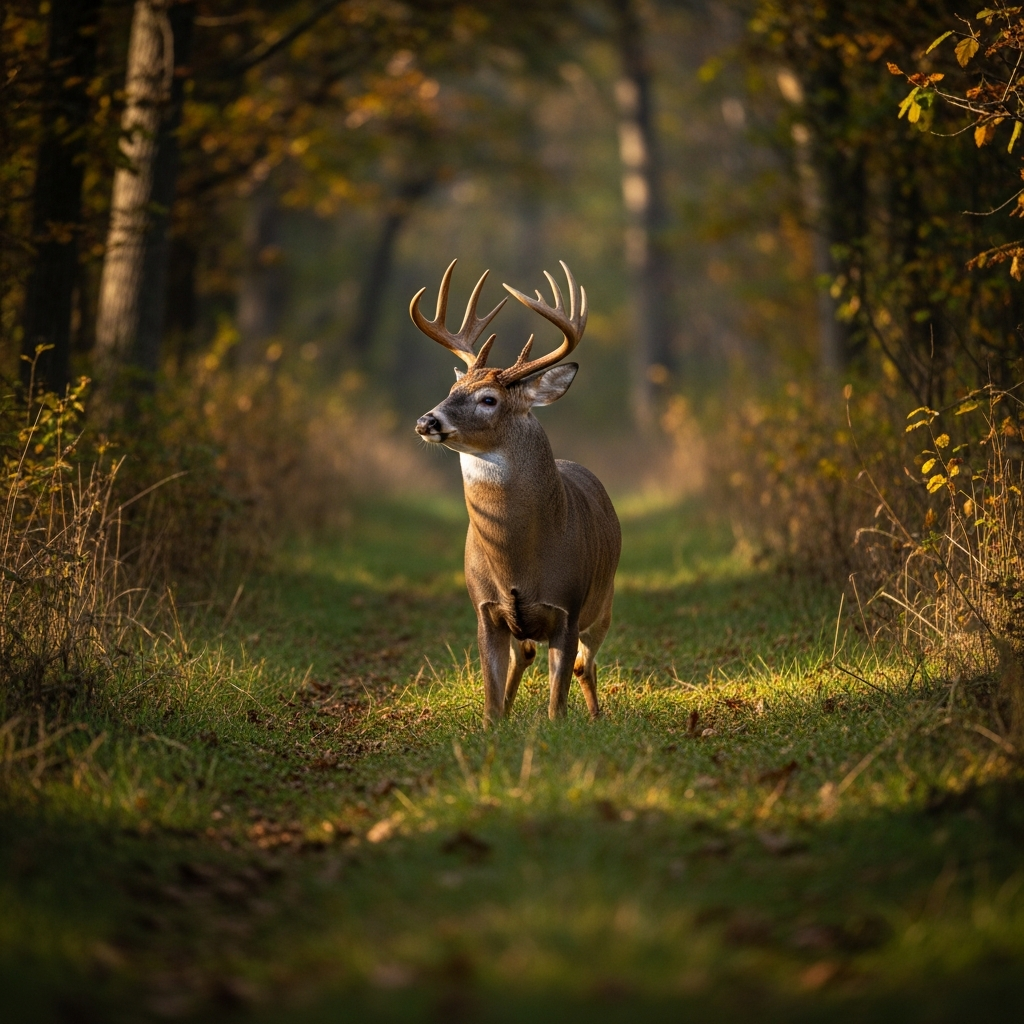
Shot Placement Is a Three-Dimensional Decision
A deer is not a flat target. The visible side of the animal is only the entry surface. The real objective is to understand the path the arrow or bullet will take after entering the body.
That path is affected by:
- The angle of the deer
- The height of the hunter
- Whether the deer is uphill or downhill
- The position of the near-side leg
- The location of the far-side shoulder
- The amount of penetration
- The weapon being used
- The presence of brush, bone or other obstacles
Instead of thinking only about where the projectile enters, hunters should think about where it must travel and where it is likely to exit.
A responsible shot should provide a reasonable path through the vital area without relying on a tiny target or perfect conditions.
Understanding the Whitetail Vital Area
The main vital area includes the heart, lungs and major blood vessels in the chest.
The lungs occupy a large portion of the chest cavity. The heart sits lower and farther forward than many hunters realize. The liver begins behind the lungs and extends toward the rear of the rib cage.
Heavy shoulder bones and leg bones protect portions of the front of the chest. The exact relationship between the shoulder, ribs and vital organs changes as the deer moves its front legs.
Important structures include:
Lungs
The lungs fill much of the upper and middle chest cavity behind the shoulder.
A projectile that passes through both lungs generally creates a strong opportunity for recovery, but the exact result still depends on angle, penetration and the path through the chest.
Heart
The heart sits low in the chest, near the front of the rib cage.
Aiming extremely low to reach the heart can reduce the margin for error. A small change in deer position or shot execution may send the projectile below the chest.
Liver
The liver sits behind the lungs.
A shot that lands farther back than intended may contact the liver. Liver hits can be fatal, but they often require a different recovery approach than a chest hit.
Shoulder and Leg Bones
The shoulder blade and upper leg bones can affect penetration.
The position of the near-side front leg can either expose or partially cover the chest area. Hunters should not assume the shoulder is a fixed shape that remains in one place.
Spine
The spine runs along the top of the body.
A very high impact may contact the spine, but a hit below or beside it may pass through muscle without reaching the chest cavity. A temporary drop does not always confirm a fatal hit.
The Broadside Shot
A broadside deer stands with its side approximately perpendicular to the hunter.
This angle is commonly preferred because it provides a clear view of the chest and a relatively direct path through both lungs.
A broadside opportunity may offer:
- A larger visible vital area
- A shorter path through the chest
- A greater chance of passing through both lungs
- A better possibility of an exit wound
- More room for slight aiming error than difficult angles
However, broadside does not automatically mean the shot is clear.
Before taking the shot, check:
- Whether the near-side leg is forward or backward
- Whether brush covers the chest
- Whether the deer is turning
- Whether the deer is alert and likely to move
- Whether the range is known
- Whether the hunter has a stable shooting position
Many hunters aim in the lower portion of the chest behind the shoulder rather than directly at the visible shoulder itself.
The exact aiming point should account for the weapon, distance, deer position and likely projectile path.
The Quartering-Away Shot
A quartering-away deer is angled so its head is farther away from the hunter than its hindquarters.
This can provide an effective path through the chest when the angle is moderate.
The hunter should visualize the path toward the far-side shoulder rather than selecting an entry point based only on the visible surface.
A moderate quartering-away angle may allow the projectile to:
- Enter behind the near-side shoulder
- Travel forward through the chest
- Contact both lungs
- Potentially exit near the far-side shoulder
The farther the deer turns away, the longer the path through the body becomes.
An extreme angle can create several problems:
- Excessive body depth
- Reduced penetration
- Contact with the paunch before reaching the chest
- A smaller effective vital path
- No exit wound
Quartering away is not automatically good simply because the deer is facing away. The angle must still provide a realistic path through the vital area.
The Quartering-Toward Shot
A quartering-toward deer has its head closer to the hunter than its hindquarters.
This angle places the near-side shoulder and heavy bone in front of part of the chest.
Compared with broadside or moderately quartering away, this angle usually provides less margin for error.
Possible concerns include:
- The near-side shoulder blocking penetration
- A smaller visible opening into the chest
- A long diagonal path through the body
- Only one lung being contacted
- The projectile exiting too far back
- Reduced blood on the ground if no exit is created
Bowhunters often choose to wait for a better angle because arrows depend heavily on penetration and a clean path through the chest.
Firearm hunters may have greater penetration, but that does not remove the need for careful shot selection.
A hunter should not allow confidence in equipment to replace judgment.
The Straight-On Shot
A deer facing directly toward the hunter presents a narrow view of the chest.
The available opening is small and protected by the front of the chest, shoulder structure and heavy muscle.
Potential problems include:
- Limited target area
- Very little room for left or right error
- Difficult penetration through the front of the body
- A long path before reaching both lungs
- Increased chance of striking only one side of the chest
Many hunters pass on a straight-on shot and wait for the deer to turn.
Waiting for a broadside or quartering-away opportunity generally provides a larger and more forgiving path through the vital area.
The Straight-Away Shot
A deer facing directly away provides a very poor view of the vital area.
The chest is protected by the entire length of the body, and the visible target does not provide a dependable path through the lungs.
A straight-away shot may lead to:
- A wound without immediate blood
- Digestive tract damage
- Poor penetration into the chest
- Difficult tracking
- A greatly delayed recovery
- An unrecovered animal
The responsible choice is normally to wait for the deer to turn or allow the opportunity to pass.
Passing on a poor shot is a sign of discipline, not failure.
Elevated Tree-Stand Angles
A hunter in a tree stand is shooting downward through the deer.
The visible entry point may appear similar to a ground-level broadside shot, but the projectile path is different.
At a steep downward angle:
- The near-side lung may be struck high
- The far-side lung may be struck lower
- The exit point may be much lower than the entry
- A small aiming error can pass above or below the far-side lung
- The effective vital area may appear narrower
The closer the deer is to the base of the tree, the steeper the shot angle becomes.
Hunters should visualize the full path through the chest rather than aiming at the same surface point used from ground level.
A steep angle may require waiting until the deer moves farther from the tree or presents a clearer body position.
Uphill and Downhill Shots
Terrain changes the angle through the body.
A deer standing uphill or downhill may appear broadside while the projectile is still traveling at an angle through the chest.
Consider:
- The angle of the ground
- The hunter's height relative to the deer
- Whether the deer's body is leaning
- The expected exit location
- Whether the far-side lung is still in the projectile path
The hunter should aim based on the internal path rather than the apparent horizontal line of the deer's back.
How the Front Leg Changes the Shot Window
A deer's front leg moves the shoulder blade and surrounding tissue.
When the near-side leg is extended forward, more of the chest may be exposed behind the shoulder.
When the leg is pulled backward, the shoulder structure may cover more of the front chest.
This is especially important for bowhunters, because heavy bone may reduce arrow penetration.
Do not rush simply because the deer pauses. Watch the leg position, body angle and surrounding cover before deciding the shot is ready.
The High-Shoulder Shot
A high-shoulder shot is generally intended to disrupt the upper chest, shoulder structure or spine area.
When precisely placed with appropriate equipment, it may cause immediate collapse. However, it also carries meaningful risks.
Possible problems include:
- Striking heavy bone without reaching the chest
- Hitting above the lungs
- Damaging muscle without causing a quickly fatal injury
- Producing limited blood
- Causing a deer to drop temporarily and then regain movement
This shot requires a strong understanding of anatomy and equipment capability.
Immediate collapse alone does not prove the deer is dead. Hunters should remain ready, observe carefully and approach according to safe hunting practices.
Neck Shots
The neck contains the spinal column, major vessels, muscle, airway and other structures, but the effective target is small.
A slight error may cause severe injury without producing a quick recovery.
The deer may also move its head and neck suddenly, even when the body appears still.
Potential concerns include:
- Small margin for error
- Rapid movement
- Limited blood trail
- Muscle injury
- Damage that does not reach the spine or major vessels
Many hunters choose the larger chest vital area instead of relying on a small neck target.
Head Shots
The head is small, constantly moving and contains many structures that can be damaged without immediately killing the animal.
A slight aiming error can cause devastating injury to the jaw, face or nasal area while allowing the deer to escape.
Because of the risk of severe nonfatal injury, many ethical hunters avoid head shots and wait for a chest opportunity.
The goal is not simply to hit the deer. The goal is to choose a shot that provides a strong opportunity for a quick and responsible recovery.
Why "Behind the Shoulder" Is Not Always Enough
Hunters often hear the phrase "aim behind the shoulder."
That phrase is useful only when combined with an understanding of angle and anatomy.
The correct visible entry location changes when the deer is:
- Quartering away
- Quartering toward
- Standing below a tree stand
- Standing uphill
- Standing downhill
- Turning
- Walking
- Moving its front leg
The better question is: where does the projectile need to travel inside the deer?
Thinking about the internal path helps the hunter avoid treating every body position as the same shot.
Pick a Small Aiming Point
Aiming at the entire chest can lead to a vague shot.
Instead, choose a small visible mark, hair pattern, shadow line or precise location.
A small aiming point helps with:
- Focus
- Shot execution
- Follow-through
- Recalling the intended impact location
- Comparing the actual hit with the intended hit
The hunter should continue watching the exact location through the shot rather than immediately lifting their head to see where the deer runs.
Do Not Shoot Through Uncertain Cover
Branches, grass, vines and palmetto stems can affect an arrow or bullet.
A lane that looks open at a glance may contain small obstacles between the hunter and deer.
Before the deer arrives, examine likely shooting lanes carefully.
When the shot opportunity appears:
- Confirm the chest is fully visible
- Check the entire path to the deer
- Avoid shooting through moving vegetation
- Do not assume a small branch will have no effect
- Wait for a clean lane whenever possible
A clear shot is more important than a fast shot.
Distance and Shot Placement
Distance increases the effects of movement, range-estimation errors and equipment limitations.
At longer distances:
- A small aiming error becomes larger
- The deer has more time to move
- Wind may have a greater effect
- Arrow speed decreases
- Projectile path becomes more important
- The hunter's stability matters more
Every hunter should know their own effective range under real field conditions.
A distance that is comfortable at a target range may not be responsible from an awkward position, in low light or when the hunter's heart rate is elevated.
Moving Deer
A walking deer changes position continuously.
Even slow movement can shift the shoulder, chest and angle during the shot.
Before shooting:
- Stop the deer when appropriate
- Allow it to settle
- Confirm the body angle
- Confirm the leg position
- Recheck the aiming point
Do not assume the deer will remain in the same place during a long bow draw or trigger squeeze.
Common Shot-Placement Mistakes
Aiming at the Shoulder Instead of the Chest
The visible shoulder is not the same as the center of the vital area.
Heavy bone can reduce penetration, particularly with archery equipment.
Aiming Too High
Hunters may aim high because they believe a deer will drop at the sound of the shot.
Trying to predict movement can place the impact above the lungs.
Use realistic equipment knowledge and avoid making extreme aiming adjustments based on assumptions.
Aiming Too Low
A low aim may be intended for the heart, but it reduces the vertical margin for error.
A small drop in the projectile or change in deer position may result in a brisket or leg hit.
Ignoring the Far Side
The hunter focuses on entry but does not consider where the projectile will exit.
This is especially dangerous on angled deer.
Rushing Because the Deer May Leave
Fear of losing the opportunity can lead to a poor decision.
A deer walking away without being shot is better than a wounded deer that cannot be recovered.
Shooting Without Confirming Range
Incorrect distance estimation can cause a high or low hit.
Use a rangefinder when practical and identify distances to landmarks before the deer appears.
Failing to Follow Through
Dropping the bow, lifting the head or looking away at the moment of release can move the shot.
Maintain form and continue focusing through the shot.
What to Watch Immediately After the Shot
The work does not end when the projectile leaves the weapon.
Watch for:
- The apparent impact location
- The deer's body reaction
- The direction of travel
- The last place the deer was visible
- Any sound after the deer enters cover
- Whether the deer slows, stumbles or continues strongly
Do not rely on one reaction to diagnose the hit.
A hard sprint, high kick, hunched posture or normal-looking escape can occur with different injuries.
Combine the reaction with the shot angle, impact location, penetration and evidence found later.
Mark Three Locations
Before leaving the stand or shooting position, mark:
- Where the hunter was standing or sitting
- Where the deer was standing at impact
- The last place the deer was seen
These points help recreate the shot line and locate the beginning of the trail.
Use visible landmarks, GPS pins or the HuntIQ Trail Maker when appropriate.
Examine the Evidence Without Destroying It
After the appropriate waiting period, approach the hit location carefully.
Look for:
- Hair
- Blood
- Bone
- Tissue
- The arrow
- Broken vegetation
- Hoof tracks
- The direction the deer entered cover
Avoid walking directly over the likely trail.
Stay to one side so blood, tracks and other evidence remain visible.
If the shot location is uncertain, do not force the evidence to match what you hoped happened.
Use all available information to make the next decision.
Shot Placement and Recovery Timing
Shot placement affects how long to wait after shooting a deer before beginning the blood trail.
A suspected chest hit may call for a different decision than a suspected liver or digestive hit.
Shot placement is only the first part of the recovery decision. Read HuntIQ's complete guide on how long to wait after shooting a deer before beginning the blood trail.
When the Actual Hit Differs From the Intended Shot
A hunter may aim correctly and still see evidence that suggests a different impact.
Possible causes include:
- Deer movement
- Deflection
- Incorrect range
- Equipment problems
- Poor release or trigger control
- Steep shot angle
- Limited penetration
Base the recovery plan on the suspected actual hit, not only the intended aiming point.
This is where a field tool such as HuntIQ's Shot Analyzer can help organize the evidence and provide guidance based on the estimated hit location.
A Responsible Shot-Selection Checklist
Before taking the shot, ask:
- Is the deer clearly identified?
- Is the background safe?
- Is the shooting lane completely clear?
- Is the distance within my effective range?
- Is the deer standing still?
- Is the angle broadside or reasonably quartering away?
- Can I visualize the path through the vital area?
- Is heavy bone likely to block penetration?
- Am I stable and prepared to follow through?
- Am I willing to let the deer walk if the angle changes?
A responsible hunter does not need to take every available shot.
The best opportunity is one that combines clear anatomy, a manageable distance, steady equipment and a realistic path through the vital area.
Final Thoughts
Good shot placement is not based on memorizing one dot on the side of a deer.
It comes from understanding anatomy, recognizing body position, visualizing the internal path and refusing opportunities that do not provide enough margin for error.
The decision made before the shot has a direct effect on everything that follows: the blood trail, the recommended wait time, the distance traveled and the likelihood of recovery.
Return to the HuntIQ hunting blog for more deer hunting guides and recovery resources.
Turn the Estimated Hit Into a Recovery Plan
HuntIQ's Shot Analyzer lets you select the estimated impact location and quickly receive the recommended wait time, expected deer behavior, shot assessment and recovery guidance before beginning the trail.
Open the HuntIQ Shot AnalyzerKeep Going When the Blood Gets Hard to See
HuntIQ's Blood Tracker uses the phone camera to help highlight small blood spots that may be difficult to see naturally while following a deer trail.
Try HuntIQ Free for 14 Days