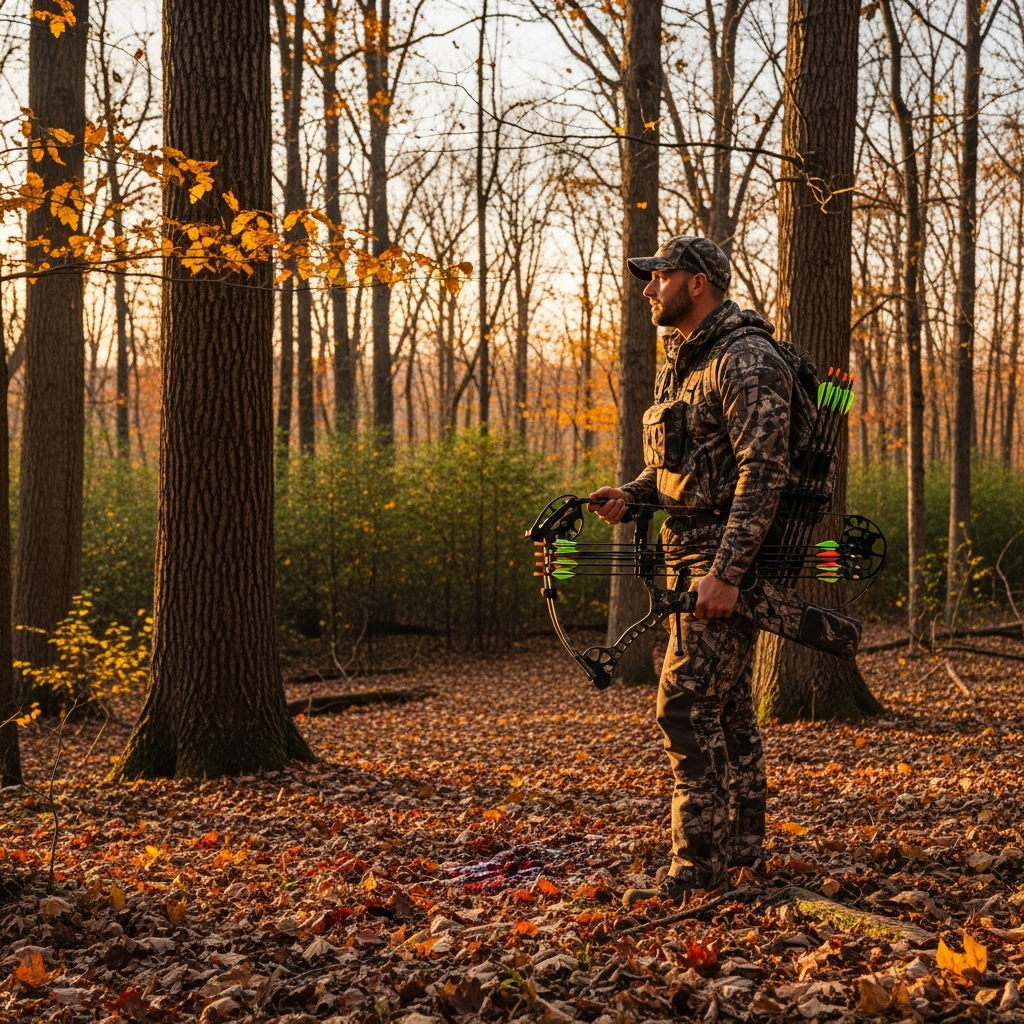
If you've hunted very long, you've either asked this question... or someone has asked you.
"How far do you think he went?"
I've heard it at hunting camps. I've heard it in parking lots. I've heard it whispered from one tree stand to another over the phone.
I wish I could tell you there was an easy answer. There isn't.
If someone tells you "Every heart-shot deer runs fifty yards" or "Every liver-shot deer goes two hundred yards," they're guessing. I've hunted long enough to know deer don't read the same books we do.
I've watched heart-shot bucks drop within sight. I've watched others disappear into a pine plantation before falling. I've watched gut-shot deer bed within seventy yards. I've watched others travel farther than I thought they possibly could.
Every deer is different. Every shot is different. Every recovery is different.
But that doesn't mean we're completely guessing. Certain hits usually create certain reactions. If you understand those reactions, you'll make much better decisions after the shot. And that's really what this article is about — not predicting an exact number, but learning what affects how far a wounded deer may travel.
Forget Everything Your Buddy Told You
Every hunting camp has one. The guy that says...
"If he ran over a hundred yards, you must've hit him too far back."
Or... "If he ran uphill, you missed him."
Or my favorite... "A heart-shot deer never leaves the field."
Don't believe any of those. Deer don't always follow our rules.
Adrenaline is an amazing thing. If you've ever watched a football player finish a play with a broken leg, you've seen adrenaline at work. A deer has that same survival instinct. Sometimes they'll run farther than you think is possible. Sometimes they barely make it twenty yards. That's why we never judge a recovery by distance alone.
The Biggest Mistake New Hunters Make
Here's something I see over and over. The hunter watches the deer run out of sight. Thirty seconds later he's climbing out of the stand. Five minutes later he's following blood. Then the trail suddenly gets worse. Now he's convinced...
"I must've made a bad shot."
Maybe. Maybe not.
The truth is he may have pushed a deer that was already trying to bed down. That's why you'll hear experienced hunters say, "The recovery starts the second you release the arrow." They're right. Everything you do after the shot affects what happens next.
A Deer Doesn't Know He's Dead
This sounds funny... but it's true.
A deer doesn't understand anatomy. He doesn't know his lungs have collapsed. He doesn't know his heart is failing. All he knows is something scared him — and survival says run.
That's why even perfectly hit deer often run. I've had brand-new hunters tell me, "He was running too good. I knew I missed." No. Sometimes a deer runs his hardest during the first few seconds after the shot. That's completely normal. Don't confuse speed with a poor hit.
Heart Shot
Let's start with the shot every hunter hopes for.
A true heart shot usually causes one thing: a tremendous burst of speed. The deer often explodes out of there. He isn't running because he feels fine. He's running because every ounce of adrenaline his body can produce just dumped into his system.
Many heart-shot deer cover somewhere between fifty and one hundred yards. Some don't make thirty. Others surprise you. I've seen one run well over a hundred yards before collapsing. That doesn't happen often... but it happens.
If your deer tears off like his tail is on fire, don't automatically assume the worst. He may simply be running on instinct.
Double-Lung Shot
This is one of my favorite shots because it's extremely effective. But here's something that surprises first-time hunters: double-lung deer often run almost as hard as heart-shot deer.
They're running on borrowed time. If both lungs are destroyed, oxygen disappears quickly. The deer simply doesn't know it yet.
You'll often notice he's running low, head stretched forward, tail tucked — maybe even a mule kick when the arrow hit. Most double-lung deer don't travel very far, but far enough that you may lose sight of them. Don't panic. That's perfectly normal.
One of the biggest mistakes I see is hunters sprinting after what was probably a perfect double-lung hit. Trust the shot. Give the deer a little time. You'll usually be glad you did. For a full breakdown of what to look for on the arrow before you start, read Reading Your Arrow.
One Lung
Now things become a little less predictable. A deer with only one functioning lung can still cover some ground. Sometimes a lot of ground.
You'll often have a decent blood trail early. Then suddenly the blood starts getting thinner. The deer slows down. Beds. Gets back up. Beds again.
This is where patience becomes incredibly important. A rushed recovery often becomes a difficult recovery. If the trail begins changing dramatically, don't be afraid to stop and think instead of simply pushing ahead.
Liver Shot
Now we're talking about one of the most misunderstood recoveries in deer hunting.
A liver-shot deer usually doesn't panic. He often doesn't sprint. Instead he looks sick — head low, back hunched, walking instead of running. Many hunters mistake this for a poor hit. Actually, it's often the exact opposite. That deer is badly hurt. He simply doesn't know it yet.
Most liver-shot deer want one thing: a quiet place to lie down. Please let them.
The farther you stay away, the better your chances become. I've watched impatient hunters push liver-shot deer another four hundred yards. I've watched patient hunters recover those same deer within a hundred yards of where they were hit. The difference wasn't the shot. The difference was patience.
Gut Shot
Nobody wants to make this shot. But if it happens, your biggest weapon isn't your bow, your rifle, or even your tracking skills. It's patience.
A gut-shot deer can travel a surprisingly long distance if pressured. Left alone? Many simply bed down. That's exactly what you want.
This is where young hunters often get into trouble. They're excited. They've waited all season. Now they're afraid another hunter will find the deer first — or coyotes, or darkness — so they begin tracking immediately. Unfortunately, that decision often sends the deer much farther than it ever intended to go.
Sometimes the hardest thing you'll do all season is absolutely nothing. And sometimes that's exactly what saves the recovery. For detailed guidance on how long to wait based on the hit, read How Long Should You Wait After Shooting a Deer?
Shoulder Hits
Now let's talk about a shot that confuses a lot of hunters.
When someone says "I hit him in the shoulder," my first question is always, "Which part?"
The shoulder isn't just one spot. There's bone, muscle, the shoulder blade, the upper leg, and the lungs sitting just behind it. Move your point of impact just a few inches and you've changed the entire recovery.
A high shoulder shot with a rifle may knock a deer flat on the ground. A lower shoulder hit with an arrow may stop the broadhead before it ever reaches the lungs.
I've seen hunters find lots of bright red blood after a shoulder hit and think they made a perfect shot. The truth was most of that blood came from muscle — and the deer lived. That's why you never judge a hit by blood alone. Always combine what you found on the arrow, the blood trail, and how the deer reacted after the shot.
Leg Hits
Nobody likes talking about leg hits. But every hunter should understand them.
A leg wound often bleeds much more than people expect. You may find bright red blood — drops every few feet. It almost looks too good to be true. Sometimes it is.
Muscle has an excellent blood supply. That's why a deer with a leg wound may leave an impressive trail for quite a while before it suddenly disappears. If your deer is running hard on three legs, don't automatically assume he'll be lying dead over the next hill.
This is where experience teaches patience — not because you're waiting for the deer to die, but because you're gathering more information before deciding what happened.
Spine Hits
A spine hit usually gets everyone's attention. The deer often drops instantly. The woods get quiet. The hunter celebrates.
Please don't. Not yet.
Some spine hits only stun the deer for a few seconds. The impact can temporarily interrupt the nervous system without causing a fatal wound. I've watched deer collapse flat on the ground... then suddenly jump back up and disappear.
If you're hunting with a firearm and a deer is down but still alive, always be prepared for a safe and ethical follow-up shot. Bowhunters should watch carefully as well. If that deer regains his feet, you'll need to begin putting the puzzle together all over again.
Terrain Makes a Difference
Now let's leave the deer for a minute and talk about the woods. Because the woods change everything.
Imagine two deer. Same hit. Same broadhead. Same distance. One is standing in a wide-open pasture. The other is standing in thick Florida palmettos. Do you think they'll travel the same way? Probably not.
Most wounded deer look for security. Security usually means cover. Sometimes that's a briar patch. Sometimes it's a swamp. Sometimes it's a pine thicket. Sometimes it's simply the thickest brush they know.
That's why experienced hunters spend just as much time reading the land as they do reading the blood.
Will a Deer Always Run Downhill?
You've probably heard that one. "A wounded deer always runs downhill."
Sometimes. Not always.
A badly wounded deer often chooses the easiest path. If downhill is easier, he may take it. But I've recovered deer that ran uphill, across hills, through water, and straight across food plots. There isn't a rule. Use the terrain as another clue — not as a guarantee.
Why Some Deer Run So Far
Here's something I want every new hunter to understand. Distance doesn't always tell you how good your shot was.
Sometimes the biggest buck you've ever seen seems to have enough determination to run forever. That's adrenaline. It's nature. That buck has spent his whole life escaping danger. He's going to do everything he can to survive.
Don't get discouraged if he runs farther than you expected. Judge the evidence — not the distance.
Why Pushing a Deer Makes Things Worse
Imagine you've just run a mile. You're exhausted. You finally sit down. Now someone starts chasing you again. What are you going to do? You're going to get up and run.
That's exactly what a wounded deer does.
Many deer are ready to lie down within minutes after the shot. But if they hear you walking, talking, or breaking branches, they'll get up and keep going. Now you've got an animal that's bleeding less, leaving fewer clues, and traveling much farther than it wanted to.
Sometimes waiting another hour saves you another half mile of tracking.
Know When to Slow Down
One of the best trackers I ever hunted with gave me a piece of advice I'll never forget.
He said... "The harder the blood trail gets, the slower you should walk."
He was right. When blood is everywhere, almost anybody can follow it. When blood becomes difficult — that's when patience wins.
Take one step. Stop. Look around. Look ahead. Look behind you. Check both sides. I've watched hunters walk right over the next drop because they were in too much of a hurry.
For everything you need to know about reading the trail once you find it, read Blood Tracking Deer: The Complete Guide to Following a Blood Trail After the Shot.
Using HuntIQ on the Recovery
Have HuntIQ Ready Before You Take the First Step
Don't wait until the blood disappears. Before you begin tracking, open HuntIQ, start Trail Maker, and have Blood Tracker ready — the same way you'd grab a flashlight before dark, not after. If the blood trail starts getting thin, that's the time to switch to Blood Tracker. Stand at the last confirmed blood, slow down, and begin scanning carefully. Small red or pink droplets that blend into leaves, pine needles, or debris can become much easier to notice. Trail Maker also keeps a record of where you've searched so you can return to the last confirmed blood without retracing the same ground twice — especially valuable after dark or in thick cover.
Try HuntIQ Free for 14 DaysHere's the Advice I'd Give My Own Son
If my son had just shot his very first deer and asked, "Dad... how far do you think he ran?"
I'd tell him: "I honestly don't know."
Then I'd say: "But let's go find out the right way."
We'll look at where you hit him. We'll remember how he reacted. We'll study the arrow. We'll read the blood. We'll think about the terrain. We'll make a plan.
Notice what I didn't say. I didn't say "Let's hurry." Because hurrying almost never helps. Thinking does.
One Last Thing
I know you're excited. You should be. There's nothing quite like watching your first deer disappear into the woods.
But don't let excitement make decisions for you.
Some of the best recoveries I've ever been part of happened because someone was willing to wait. Some of the worst recoveries I've ever seen happened because someone couldn't.
The distance a deer runs isn't nearly as important as the decisions you make after the shot. Stay calm. Pay attention. Trust the evidence.
A good hunter isn't measured by how quickly he starts tracking. He's measured by how often he recovers the deer he shoots. That's the goal — every single time.
Keep Learning
Understanding distance is only one part of the recovery. These guides cover the rest.
- How Deer React After the Shot: What the Mule Kick, Hunched Back, Tail, and Running Style May Tell You — Read the deer's body language in the seconds after the shot so you know what you're dealing with before you climb down.
- Blood Tracking Deer: The Complete Guide to Following a Blood Trail After the Shot — A full walkthrough of blood colors, trail patterns, and what to do when the blood disappears.
- How Long Should You Wait After Shooting a Deer? — Detailed wait time guidance by hit location, weather, and conditions.
- Reading Your Arrow: What Blood, Hair, Fat, and Other Clues Can Tell You After the Shot — Before you take a step, your arrow is already telling you where you hit the deer and how long you should wait.