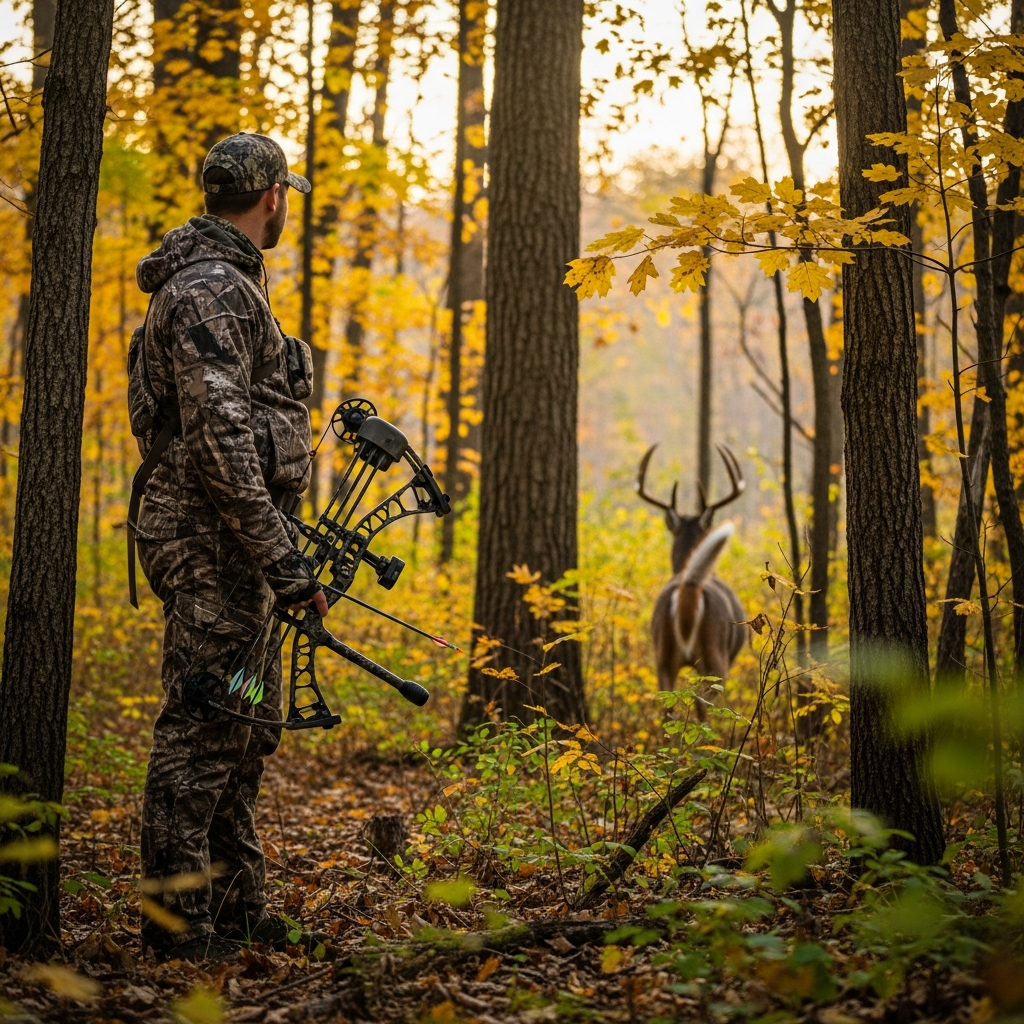
I've watched grown men shake so hard they could barely climb out of a stand. I've watched teenagers hit a deer perfectly and convince themselves they missed. I've also watched hunters make a poor shot, rush after the deer, and turn a recoverable animal into one that was never found.
If you're new to hunting, I want you to know something.
What you're feeling after the shot is completely normal.
Your heart is pounding. Your knees are shaking. You're replaying that shot over and over in your head.
You keep asking yourself...
"Did I hit him good?"
That's the question every hunter asks.
The good news is the deer usually starts answering that question within the first few seconds after the shot. The trick is learning how to read those clues.
Now before we go any farther, I want to tell you something that's probably the most important lesson in this whole article.
There isn't one reaction that guarantees one certain hit.
A deer doesn't read hunting magazines. They don't always react exactly the way we expect.
One deer may mule kick after a lung shot. Another one may simply take off running. One heart-shot buck may collapse in sight. Another may disappear over the hill before piling up.
So don't hang your hat on just one clue. Instead, put all the clues together.
Watch how the deer reacted. Remember where you aimed. Study your arrow. Look at the blood. Take your time.
The more pieces of the puzzle you gather, the better your chances of making the right recovery decision.
Let's Start With the Shot We All Hope For
The Heart Shot
If you ever make a perfect heart shot, don't be surprised if the deer acts like nothing happened... at first.
I've heard new hunters say, "He ran too hard. I think I missed."
Not necessarily.
A deer has an incredible amount of adrenaline. Even with a heart that's been destroyed, he may still run fifty or sixty yards before everything catches up with him. Sometimes farther.
What you'll often notice is the deer explodes from the shot. He's running hard. His body is stretched out. His tail may be tucked. You may even see a mule kick. Then suddenly... it's almost like somebody flipped a light switch. He loses power. Stumbles. Falls.
If you heard him crash, that's always encouraging — but don't automatically assume the crash you heard was your deer hitting the ground. I've heard deer plow through palmettos and sound like a bulldozer. Always verify.
Even on what feels like a perfect heart shot, I still tell new hunters to settle down before climbing out of the stand. Rushing has ruined more recoveries than waiting ever has.
The Double-Lung Shot
This is probably my favorite shot on a deer.
Why? Because it's forgiving. The lungs are large. A well-placed arrow through both lungs is one of the most ethical shots you can make.
Now here's something that surprises a lot of first-time hunters. A double-lung deer can still run. Sometimes really well. Don't let that scare you.
The lungs still contain oxygen for a few moments, and that deer doesn't realize just how badly he's hurt. You'll often see him run low to the ground with his head stretched out. Many times he'll have his tail tucked.
If you recover your arrow, you'll often find bright pink blood mixed with tiny bubbles. Those bubbles are air escaping from damaged lungs. That's one of the best clues you can hope to see.
Most double-lung deer don't go very far. The hard part is trusting yourself enough to wait a little while before taking up the trail. For more on what your arrow can tell you, read Reading Your Arrow before you take a step.
The Single-Lung Shot
Now let's talk about a shot that fools a lot of hunters. A single-lung hit.
At first, everything may look great. There's blood. The deer ran hard. Maybe you even found bubbles. Then... the blood starts getting thinner. The trail becomes harder to follow. Hours later you're wondering what happened.
One healthy lung can keep a deer alive much longer than people realize. Some survive. Some don't.
If you suspect only one lung was hit, don't assume you'll find the deer within a hundred yards. Slow down. Pay attention to every clue. And if the trail becomes questionable, don't be afraid to back out and regroup.
The Liver Shot
This one requires patience. More patience than most new hunters have. That's not an insult. It's just excitement.
A liver-shot deer often doesn't look like he's hurt very badly. He may hunch his back. Walk instead of run. Keep his head low. Ease off into thick cover. That's exactly what you want him to do. Because if you leave him alone, there's a good chance he'll bed down.
The biggest mistake I see? Hunters saying... "He didn't act hurt enough. I'd better go find him."
No. Leave him alone. Give him time. A liver-shot deer usually isn't going anywhere if you don't pressure him.
The Gut Shot
Nobody wants this shot. But it happens. Even experienced hunters make mistakes. The important thing now isn't beating yourself up. It's making the best recovery you can.
A gut-shot deer often looks uncomfortable almost immediately. He may hunch his back. Walk slowly. Stop often. Sometimes he'll even look back toward where the shot came from.
If you recover the arrow, you may notice green material or a sour smell. That's your clue.
Now comes the hardest part. Walk away. Seriously. Back out. Go home if you have to. Give that deer the time he needs to lie down.
I've seen hunters recover gut-shot deer because they waited. I've also seen hunters lose them forever because they couldn't. Patience is your greatest weapon now.
Not sure how long to wait? Read How Long Should You Wait After Shooting a Deer? for a full breakdown by hit location.
The Shoulder Shot
This one depends on exactly where the shoulder was hit. A high shoulder hit can drop a deer instantly. A lower shoulder hit may simply break bone without reaching the vitals. That's why shoulder hits can be confusing.
Don't assume a deer that falls over is dead. I've watched deer hit the ground like a sack of potatoes — only to jump back up a few seconds later.
If you're hunting with a firearm and the deer is still moving, always be prepared for a safe follow-up shot. Bowhunters may find heavy bone, coarse hair, or very little penetration. Every shoulder hit deserves careful evaluation before beginning the recovery.
The Leg Hit
Leg hits can fool even experienced hunters.
Why? Because they often bleed a lot. Bright red blood everywhere. It looks terrible. But muscle wounds can produce impressive blood trails without being fatal.
If the deer is running well on three legs, don't automatically assume he'll be found nearby. Watch the direction he traveled. Mark everything. And prepare yourself for the possibility that the wound may not be immediately fatal.
The Spine Shot
A spine shot usually gets everyone's attention. The deer often drops instantly.
But here's something many hunters don't realize. Sometimes that's only temporary. The impact can shock the spinal cord enough to knock the deer down without killing it.
If the deer is still raising its head... moving its ears... trying to get up... be ready for a quick, ethical follow-up shot if it's safe and legal to do so. Never assume a dropped deer is already dead.
Don't Read Just One Clue
Here's where new hunters get themselves into trouble. They see one thing... and ignore everything else.
Maybe they saw a mule kick. Maybe they found pink blood. Maybe the deer humped up. Those are all good clues. But they're only clues.
Now start putting the puzzle together.
- Where was the deer standing?
- Where did you aim?
- How did he react?
- What did your arrow tell you?
- What did the first blood look like?
- How long has it been?
Every answer helps paint a clearer picture. For a full breakdown of what body language and running style tell you beyond the hit location, read How Deer React After the Shot. For what the arrow itself reveals before you take a single step, read Reading Your Arrow.
Here's the Advice I'd Give My Own Grandson
If I had my grandson sitting beside me after he'd just shot his first buck, here's exactly what I'd tell him.
Don't rush. Don't let excitement make decisions for you. Watch everything. Remember everything. Trust what the evidence tells you — not what you hope happened.
If you're unsure, waiting another hour almost never hurts. Pushing a wounded deer often does.
A recovered deer is always worth another hour of patience.
How HuntIQ Fits Into the Recovery
Organize the Clues With HuntIQ
No hunter remembers every detail perfectly once the adrenaline starts pumping. HuntIQ's Shot Analyzer lets you compare where you think the deer was hit with how it reacted, then helps organize the clues and suggest an appropriate recovery plan. Once tracking begins, Trail Maker marks your path in and out of the woods. If blood becomes difficult to see, Blood Tracker may help small red or pink droplets stand out against leaves and debris. No app can promise you'll recover every deer — good judgment and patience will always matter most. HuntIQ is simply another tool to help you make better decisions when the pressure is on.
Try HuntIQ Free for 14 DaysOne Last Thought
If you hunt long enough, you're going to make a bad shot. Every experienced hunter has. Don't let anyone tell you otherwise.
What separates a good hunter from everyone else isn't that he never makes mistakes. It's that he does everything he can to recover the animal afterward.
Take your time. Watch the reaction. Read your arrow. Study the blood. Think before you move.
Because the few seconds after the shot often tell you more than the shot itself ever could. And the better you become at reading those clues, the more deer you'll recover — and that's what ethical hunting is all about.
Keep Learning
Now that you know how deer react to each hit, these guides will help you follow through on the recovery.
- How Deer React After the Shot: What the Mule Kick, Hunched Back, Tail, and Running Style May Tell You — A deeper look at body language clues — mule kicks, tail position, running style — and what they mean independently of shot placement.
- Reading Your Arrow: What Blood, Hair, Fat, and Other Clues Can Tell You After the Shot — Your arrow carries some of the most important evidence of the entire hunt. Learn how to read every clue before you take a step.
- How Long Should You Wait After Shooting a Deer? — Detailed wait times by hit location and conditions so you never push a deer out of its bed too soon.
- Blood Tracking Deer: The Complete Guide to Following a Blood Trail After the Shot — When it's time to start following the trail, this guide walks you through every type of blood and what it means.