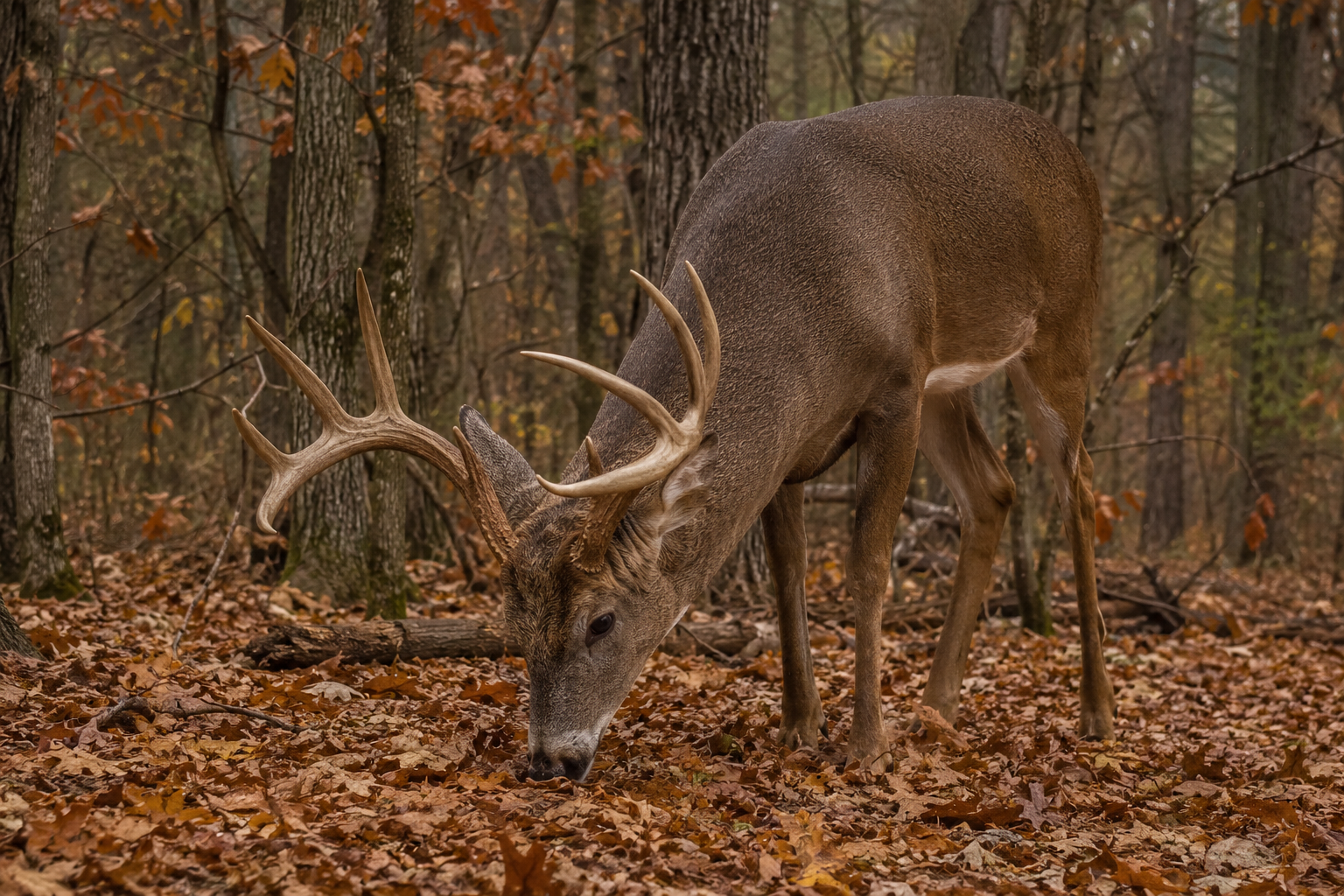
Hunters spend an awful lot of time worrying about scrapes, rubs, moon phases, wind direction, rut dates, trail cameras, and every other thing we can find to argue about around a campfire. All of that has its place. But there’s one thing a deer has to do every single day whether he’s chasing does, growing antlers, raising fawns, dodging coyotes, or hiding from you.
He has to eat.
And here’s where a lot of hunters get fooled. A whitetail does not have one favorite food that stays his favorite all year. Deer are selective browsers. They constantly pick through what is available and choose food according to palatability, digestibility, nutritional value, availability, and what their bodies need at that particular time of year. Wildlife researchers have documented deer eating hundreds of different plant species, and at any particular time only a handful of those may make up most of their diet.
That means the hot food source you watched deer pile into last month might look like an abandoned church picnic this month.
Understanding why they switched is where a hunter starts getting ahead of them.
Deer Aren’t Cows
First thing we need to straighten out is this idea that deer live on grass.
They don’t.
A whitetail is what biologists call a concentrate selector. That means he is built to pick out the most nutritious and easily digested parts of plants rather than standing in a pasture vacuuming up grass like a cow.
Look at a deer feeding in good natural habitat and you'll see him moving. A bite here. Two bites there. Tender leaves off this plant. The end of a vine over there. A berry. A mushroom. A few fresh shoots. Then he moves again.
Florida wildlife biologists describe their diet as including leaves, twigs, stems, flowers, acorns, fruits, mushrooms and even aquatic vegetation. Across the Southeast, deer commonly eat broadleaf weeds called forbs, woody browse, vines, soft fruits and hard mast such as acorns.
That patch of waist-high weeds you walked through complaining that somebody ought to mow it might be a better deer cafeteria than the prettiest grass field on the property.
Spring: Give Me Something Green and Tender
Spring is when the woods start putting groceries back on the shelves.
Fresh plant growth is tender, digestible and often rich in protein. Deer come out of the leaner months and begin concentrating heavily on new growth, forbs, vines and legumes.
Common ragweed is a great example. Hunters look at ragweed and see a weed. A deer sees groceries. Mississippi State notes that common ragweed can contain crude protein levels exceeding 20 percent. Other highly useful spring and summer foods include clover, blackberry, grape, Virginia creeper, greenbrier, asters and a variety of young broadleaf plants.
This is also a nutritionally demanding period. Bucks are beginning antler growth. Does may be pregnant, giving birth or producing milk. Growing fawns need quality nutrition.
That means the deer aren't simply hunting calories. Protein and digestibility matter.
This is one reason a pile of corn is not automatically the finest food in the woods just because deer will eat it.
When spring woods are full of tender, high-quality vegetation, natural forage can compete very well with—or completely outdraw—a bait pile.
The deer ain't disrespecting your corn. He's just found something he needs more.
Summer: The Salad Bar Is Wide Open
Summer is one of the most misunderstood feeding periods.
When rainfall and growing conditions are right, summer habitat can provide an enormous variety of food. This is prime time for forbs, vines, young leaves, sprouts, legumes and agricultural crops such as soybeans.
Greenbrier is one of the important ones across much of the Southeast. Several species are heavily used by whitetails, and Mississippi State rates many greenbriers as high-preference deer forage. Blackberry and dewberry, grape, beautyberry, sumac and other browse can also contribute heavily depending on the region.
And don't overlook ugly country.
A mature forest with a closed canopy may look beautiful to us, but there's often not much deer food from the ground up to about five feet. Cut timber, prescribed fire, storms and other disturbances can let sunlight hit the ground and create a flush of new plants and stump sprouts.
That's why you so often find deer feeding in young cuts, brushy edges and recently disturbed ground.
The prettiest woods aren't always the best deer woods.
Sometimes the nastiest-looking patch on the property is where supper is being served.
Late Summer: Fruit Starts Changing the Menu
As summer begins turning toward fall, soft mast starts becoming increasingly important.
Persimmons are a big one wherever they occur. Wild grapes, berries, apples in appropriate regions, pawpaw and other fruits can produce short-lived feeding patterns that are absolutely worth paying attention to.
And I mean short-lived.
A productive persimmon tree can look like the center of the deer universe for several days, and then once the fruit is gone the deer disappear right along with it.
This is one reason scouting food requires more than finding a plant.
You need to know when that plant produces food.
A deer doesn't care how many persimmon trees you've got if there isn't a ripe persimmon hanging on one of them.
Then the Acorns Start Falling
Now we get to one of the biggest food changes of the entire year.
Acorns.
When a good acorn crop begins dropping, deer movement can change seemingly overnight.
Missouri wildlife managers specifically advise hunters that deer may abandon other food sources when acorns become available. When mast is abundant, deer can spread throughout the woods and feed without having to travel as far.
That's why that feeder you've been getting 200 pictures a week over can suddenly go quiet.
Your deer didn't necessarily disappear.
They may be standing 300 yards away eating acorns.
And if you've got several types of oak, pay particular attention to the white-oak family. White-oak acorns generally contain less tannin than many red-oak-group acorns, making them less bitter and often more palatable. Whitetails frequently seek them out first when they're available.
Don't misunderstand that to mean red-oak acorns aren't important. They absolutely are. Different oak species drop at different times, production varies from tree to tree and year to year, and red-oak-group acorns can continue supplying food after some white-oak acorns have disappeared.
What a smart hunter does is quit asking, “Are there oak trees here?”
He starts asking:
Which oak trees are dropping right now, and which ones are the deer actually eating under?
Tracks, droppings, disturbed leaves and cracked acorn hulls will tell you more than the name on the tree.
So When Will a Deer Pick Corn Over Natural Food?
Now we're getting to the argument that has probably sold more bags of corn than anything else in deer hunting.
Yes, deer like corn.
No, corn is not always their first choice.
Corn is primarily an energy food. It provides carbohydrates and calories, which can become particularly attractive as deer shift toward building and maintaining fat reserves.
But deer feeding decisions are affected by what else is available.
Researchers conducting baited deer camera surveys have specifically warned that bait attraction changes with the season and that abundant acorns and preferred natural forage can reduce deer visits to bait.
So when does corn tend to get stronger?
One common time is after preferred mast begins running out.
If the woods had a heavy acorn crop and those acorns are disappearing, corn may suddenly become much more attractive. The same can occur when frost, drought or seasonal changes reduce the quality and availability of green browse.
Harvested cornfields can also become important during fall and winter because deer scavenge waste grain for carbohydrates and energy.
But put a corn pile beside a hot white oak that's dumping fresh acorns and don't be shocked when the deer walks past your yellow gold to eat what God dropped out of the tree.
What About Commercial Deer Feed?
A properly formulated deer ration and plain corn aren't the same thing.
Commercial feeds may contain additional protein, minerals and other nutrients, depending on the formula. That can make them nutritionally different from straight corn.
Whether deer choose them is another matter.
Familiarity matters.
Some deer take readily to a feeder. Others don't. Pressure matters. Cover matters. Human scent matters. The location of the feeder matters. The quality of surrounding natural forage matters.
You can put the finest deer feed ever manufactured in the wrong place and a mature buck may wait until 2:30 in the morning to touch it.
Meanwhile he'll stand in daylight eating greenbrier 70 yards away because that food happens to be inside cover where he feels safe.
A deer doesn't make feeding choices based on the label on your feed sack.
Fall Into Winter: Calories Become More Important
As growing vegetation declines across much of whitetail country, deer increasingly depend on mast, crops, browse and woody vegetation.
Where acorns remain abundant, they can be a major food source. Where mast fails or disappears, corn, wheat, soybeans, other crops and woody browse can become more important.
In northern country, winter changes the equation even more. Browse—the tender tips, buds and twigs of shrubs and young trees—can become critical when other food disappears.
This is also where hunters need to be careful about believing that dumping a truckload of corn into starving deer automatically helps them.
A deer's rumen contains microorganisms adapted to its existing diet. Sudden introduction of large quantities of unfamiliar high-carbohydrate food can cause digestive trouble, including potentially fatal rumen acidosis. Wildlife authorities in northern states specifically discourage suddenly feeding deer corn during severe winter conditions.
Good habitat beats trying to rescue bad habitat with a feed sack.
Southern Deer Don't Read Northern Deer Calendars
Here's something especially important for hunters in Florida and the Deep South.
Don't read an article written about Iowa deer and assume your woods operate on exactly the same calendar.
Florida deer may have green vegetation available when northern deer are digging through snow. Florida rut timing itself varies dramatically across the state, and many southern plants remain available much longer than comparable forage farther north. Florida deer consume leaves, shoots, fruit, mast, fungi and other plant material throughout this extended growing environment.
So think in food events, not merely calendar months.
When did the rain produce new growth?
When did the persimmons ripen?
When did your particular white oaks begin dropping?
When did the acorns get cleaned up?
When did that greenbrier put out tender new tips?
When did the soybean leaves yellow?
When did frost knock back the available forbs?
Those events matter more to the deer standing on your property than something somebody wrote saying, “On October 15th deer switch to such-and-such.”
A buck ain't carrying a calendar.
Some Natural Browse Every Hunter Should Learn
I can tell you something that'll improve your scouting without buying another gadget.
Learn your plants.
Not every plant in the woods—unless you've got a whole lot more spare time than I do—but learn the important ones where you hunt.
Across much of the Southeast, pay attention to greenbriers, blackberry and dewberry, grape, sumac, dogwood, ragweed, pokeweed, Virginia creeper, beautyberry, clovers, young hardwood sprouts, persimmon and the local oak species.
Some will be preferred foods. Some will be staple foods. Some only matter for a few weeks each year.
And regional differences are huge. A plant that is a major food source on one property may hardly exist twenty miles away.
That is why there is no universal magic deer food.
Research into deer forage selection has repeatedly shown that preference changes with nutritional quality, plant maturity, natural-food availability, location and season. Even food-plot plants can be heavily selected on one property and largely ignored somewhere else.
Watch the Deer, Not the Feed Sack
Here's what I want you to take away from all this.
When deer stop showing up somewhere, don't immediately decide they've left the property.
Ask yourself what changed on the dinner table.
Walk your oak hammocks.
Check the persimmons.
Look at your greenbrier.
Find fresh browse tips with that rough, torn-off appearance deer leave behind.
Look at crop maturity.
Look for fresh droppings beneath producing trees.
See what's been eaten and what's been ignored.
And pay particular attention whenever one major food source begins becoming available or starts running out.
Those transitions are when deer patterns change.
The hunter who recognizes the switch first has an advantage over the hunter sitting beside an empty feeder wondering where everybody went.
Corn has its place. Food plots have their place. Supplemental feed has its place where it's legal and appropriate.
But none of them erase thousands of years of whitetail feeding behavior.
A deer is going to spend his life looking for the best combination of nutrition, availability and security he can find.
Figure out what he's eating today, where he's getting it, and how he's getting there without exposing himself—and you've figured out an awful lot about where that deer is going to be.
Because when it comes right down to it, there's one truth about deer hunting that ain't changed much:
Find the groceries, and sooner or later you'll find who's coming to supper.
Just make sure you're hunting the groceries they're eating now instead of the ones they were eating three weeks ago.
The woods don’t mind teachin’ ya, but the lessons ain’t cheap.
— Waylon Dixon