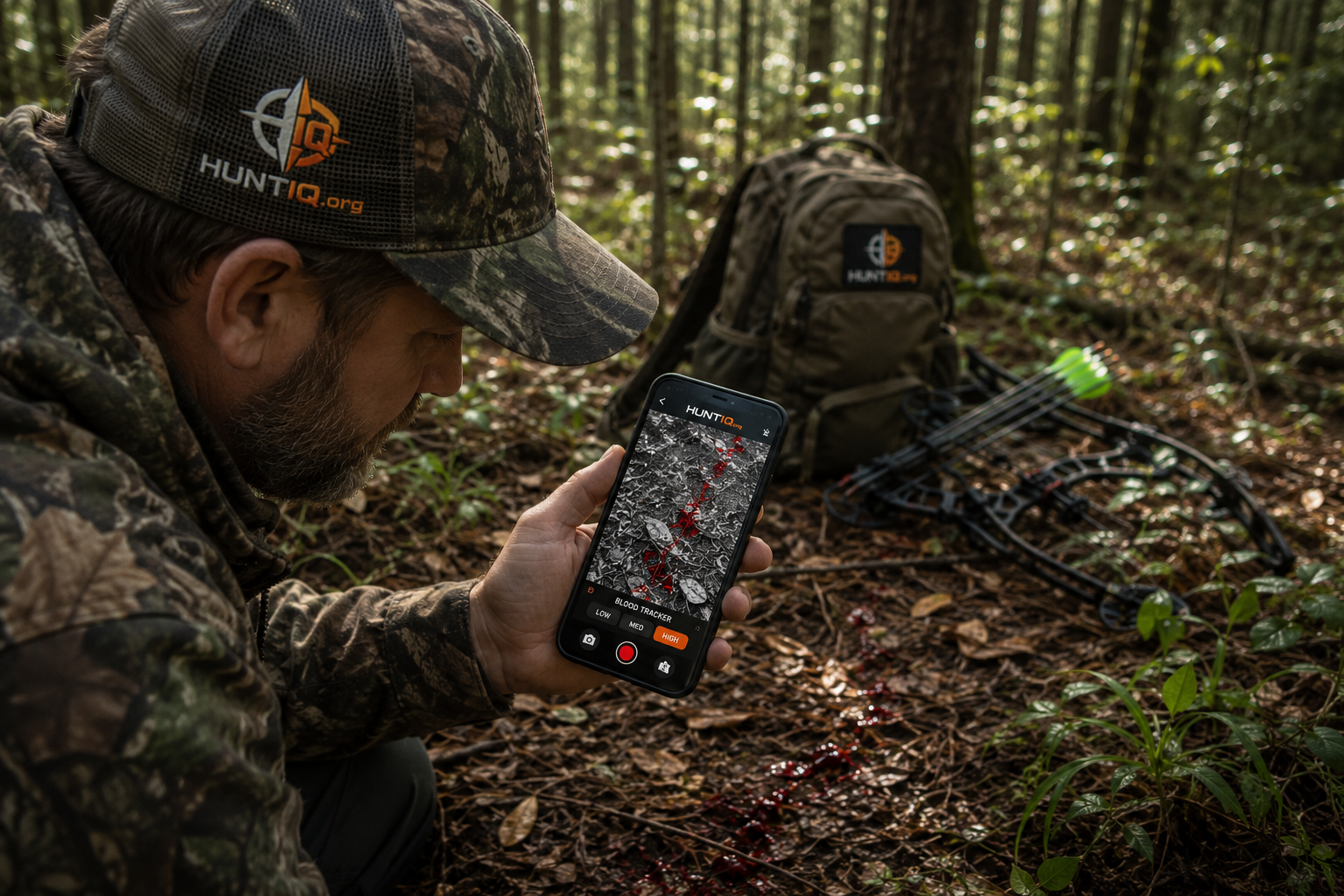
If you've hunted long enough, chances are you've stood there scratching your head wondering where in the world that deer went. The shot looked good. You found blood. Then fifty yards later...nothing. Just leaves, sticks, pine straw, and a sick feeling in your stomach.
That's usually about the time somebody says, "Better call a tracking dog."
Now don't get me wrong. I have the highest respect for a good tracking dog and the folks who spend countless hours training them. I've watched dogs recover deer that nobody believed could ever be found. They're incredible animals, and if it comes down to needing one, don't hesitate to make the call.
But here's what I don't understand.
Hunters will spend hundreds of dollars on every blood-tracking gadget ever made before they'll spend five minutes using the best tool they already have in their pocket.
Walk through any sporting goods store and you'll see shelves full of miracle products. Blood tracking lights. UV lights. Blue lights. Green lights. Flashlights that claim they'll make blood glow like a Christmas tree. Every year somebody comes out with another one promising it'll find every drop.
Truth is, most of them don't.
During the day, they're about as useful as a screen door on a submarine. The sun is already throwing more light on the woods than any flashlight ever could. No colored beam is going to overpower daylight. At night they might help once in a while, but they also make wet leaves shine, dew sparkle, bark change color, and every little shiny object starts looking like blood. Before long you're chasing reflections instead of chasing your deer.
Then there are all the old tricks.
Spray hydrogen peroxide.
Carry a UV flashlight.
Tie flagging tape every few yards.
Get down on your hands and knees.
Walk circles.
Back out and come back tomorrow.
Some of those methods can help in the right situation, but none of them fix the real problem.
Your eyes can only see what your eyes can see.
Blood doesn't disappear. It gets hidden.
One tiny drop on the underside of a palmetto leaf...
A smear on the edge of a pine needle...
A pinhead-sized drop mixed into brown oak leaves...
A splash tucked against the shadow side of a stump...
The blood is often still there. Your eyes just quit picking it up.
That's exactly why HuntIQ was built.
Instead of trying to make blood glow with another gimmick flashlight, HuntIQ uses your phone's camera to help separate blood from everything around it. Leaves, grass, pine straw, bark, dirt, shadows, and changing light all work against your eyes. HuntIQ helps you work through that clutter so those tiny drops become easier to spot before the trail goes cold.
That's why I tell every hunter the same thing.
Before you call a tracking dog...
Before you start making giant circles through the woods...
Before you convince yourself the deer quit bleeding...
Open HuntIQ.
More often than not, what looked like the end of the blood trail turns out to be nothing more than the point where your eyes stopped seeing it. Hunters are surprised all the time when HuntIQ picks up another drop...then another...and another until they're standing over the deer they were ready to give up on.
Does that mean you'll never need a tracking dog?
Absolutely not.
There are times when calling one is the smartest decision you can make.
A liver shot where you need to wait several hours.
A gut shot where pushing the deer could cost you the recovery.
Heavy rain washing away the trail.
Property lines getting close.
Or you've carefully worked every inch of the trail with HuntIQ and you've honestly run out of sign.
That's when a trained tracking dog becomes worth every penny.
The difference is you've already done everything possible before making that call. You've marked the exact shot location, the exact path the deer traveled, and the exact location of the last confirmed blood. That gives the dog handler a tremendous advantage instead of simply pointing toward the woods and saying, "I think he went that way."
At the end of the day, none of us care who finds the deer.
We don't keep score.
We don't get bonus points for doing it without help.
Our responsibility as hunters is simple: recover the animal as quickly and ethically as possible.
So before you reach for another fancy flashlight...
Before you buy the next miracle gadget...
Before you pick up the phone to call a tracking dog...
Use HuntIQ first.
The majority of the time, the blood is still there.
You just need the right tool to help you see it.
If HuntIQ gets you to your deer, you've saved yourself time, money, and a long wait for a dog handler to arrive.
If it doesn't, you've given that tracking dog the best possible starting point.
Either way...
The deer gets recovered.
And that's what matters.