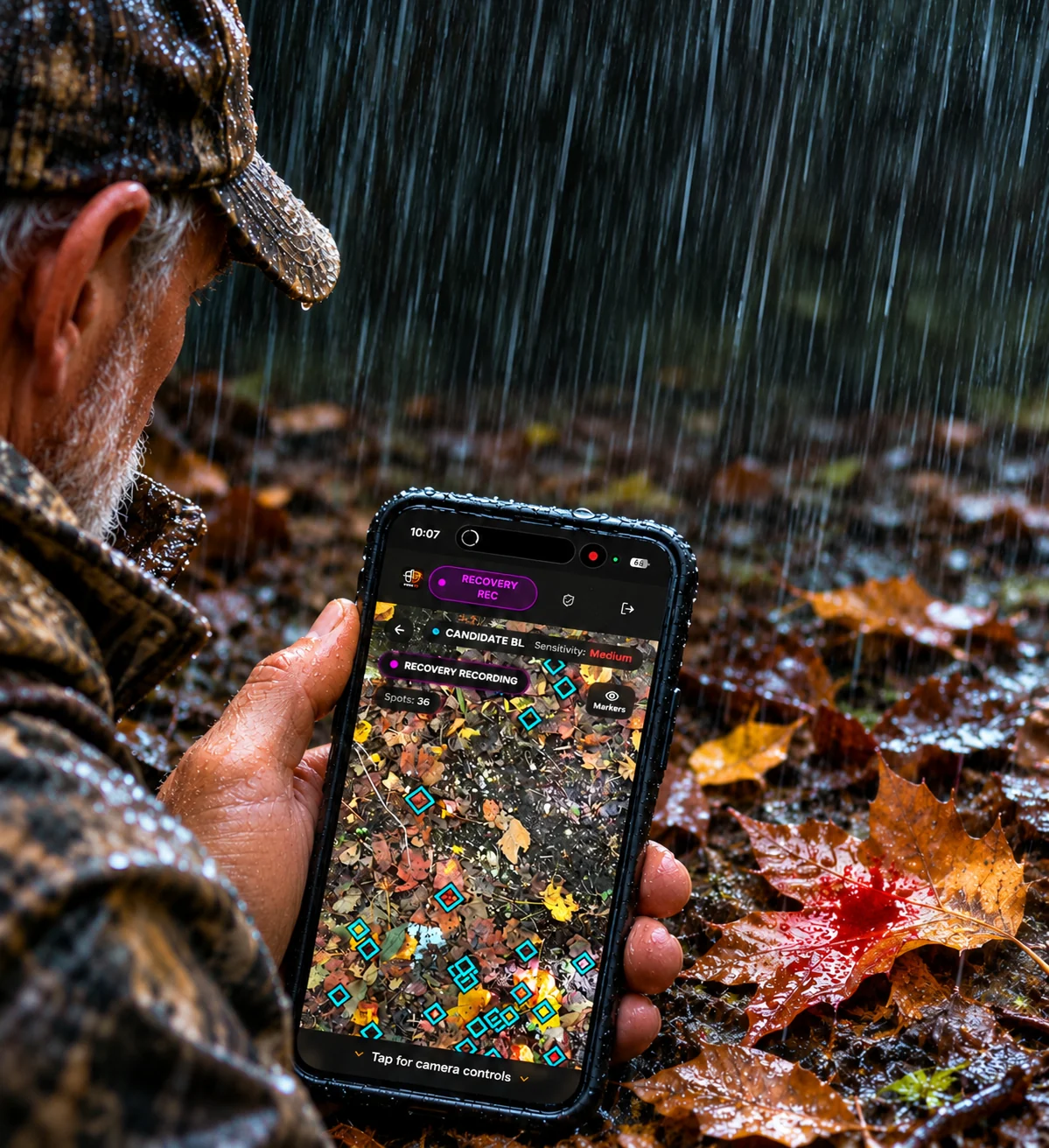
I've been hunting deer long enough to know that Mother Nature don't always cooperate with a man's plans. You can spend all season waiting on that one good buck, finally get your opportunity, make your shot, and wouldn't you know it, here comes the rain. Now you've got a wounded deer somewhere in the woods, the leaves are soaking wet, and every drop of blood that hits the ground is fighting a losing battle against the weather. But don't go hanging your head just yet, because tracking a deer in the rain ain't impossible. You've just got to understand what that water does to blood, know where to look, and use every tool you've got available.
What Rain Does to a Blood Trail
First thing y'all need to understand is that rain doesn't necessarily make blood disappear the instant it touches it. A light drizzle might spread a drop of blood across a leaf, making it look like a thin pinkish stain instead of a bright red spot. Sometimes that spreading makes the blood easier to notice, and sometimes it makes it nearly impossible to recognize. A steady rain can dilute the blood until there's hardly any color left, and a hard downpour can wash exposed blood completely off leaves, grass, rocks, and pine needles. The heavier the rain and the longer it's been falling, the less visible evidence you're likely to have left.
Wet leaves present another problem. A dry oak leaf might hold a nice bright drop of blood right on its surface, but a wet leaf can cause that same drop to spread, run toward the edge, or mix with the water already sitting there. Pine straw, moss, and loose soil can soak up or hide blood, while rainwater running downhill can carry it away from where the deer actually traveled. That's why a good tracker never assumes every reddish stain on the ground marks the exact path of a wounded deer.
Don't Let the Rain Make Your Decisions for You
Now here's something I want y'all to remember. Just because it's raining doesn't mean you ought to jump out of your stand and start chasing that deer. The most important thing is still where you hit him. A deer with a solid heart or double-lung hit may not travel very far, and after a reasonable wait you may be able to begin recovering him before the rain destroys much of the evidence. But a deer hit farther back in the liver or stomach is a whole different situation. Push that animal too soon and you could send him hundreds of yards farther into the woods, leaving you with an even harder recovery and less blood to follow.
This is where HuntIQ's Shot Analyzer can help you make a better decision. Enter where you believe your shot struck the deer, study the information about the organs involved, and consider the recommended waiting period. Those recommendations are guidance, not guarantees, because no two wounded deer behave exactly alike. You still need to consider the deer's reaction, your confidence in the shot, the weather, and the possibility of meat spoilage in warm temperatures. Rain might be washing away your trail, but pushing a poorly hit deer can cost you the entire recovery.
Where to Look for Blood When Everything Is Wet
When you finally begin tracking, don't just stare at the ground. A wounded deer brushing against tall grass, palmetto fronds, briars, or low-hanging branches may leave blood on vegetation that receives less direct rainfall. Look underneath leaves, along sheltered stems, and around places where the deer squeezed through thick cover. Check both sides of narrow trails because blood can rub off a wounded animal as it passes. A little protected blood underneath a leaf might survive long after the exposed blood on top has washed away.
Pay particular attention to the places where a deer changes direction, jumps a log, crosses a fence, or pushes through thick vegetation. You may find blood on the side of a branch or the underside of a leaf even when there's nothing left on the ground. Don't overlook fresh tracks in soft mud, disturbed leaves, broken twigs, or freshly bent grass, either. Rain might take away your blood trail, but it can also soften the ground enough to reveal hoofprints that wouldn't have been visible on a dry day.
Using HuntIQ's Blood Tracker in Wet Conditions
Here's where a little modern technology can give an old-fashioned deer tracker another set of eyes. HuntIQ's Blood Tracker uses your phone's camera to analyze what you're looking at and highlight colors that may indicate blood. Instead of depending entirely on your eyesight to notice a tiny reddish speck against a background of brown leaves, green vegetation, and dark soil, the tracker can place visible markers around possible blood-colored areas. This can be especially helpful for hunters who have trouble distinguishing red from green or brown.
But there's something important y'all need to understand. HuntIQ doesn't magically see blood through water, and it can't recover blood that's already washed completely away. The camera needs visible color information to work with. Wet reddish leaves, reflections, certain types of bark, and other natural materials can sometimes trigger markers even when there's no blood present. Think of those markers as places worth investigating, not proof that you've found blood.
When you're tracking in wet conditions, I recommend starting with the Blood Tracker set on Low sensitivity. Wet woods are full of shiny surfaces, dark shadows, and reddish vegetation, so starting on Low can help reduce unnecessary highlights. Hold your phone steady and move the camera slowly across the ground, leaves, and surrounding brush. Don't swing it around like you're trying to swat a hornet. Give the camera a clear look at each area, and whenever a marker appears, stop and examine that spot with your own eyes.
If you're finding confirmed blood but the tracker is overlooking some of the smaller or more diluted spots, try Medium sensitivity and see whether it helps. High sensitivity may reveal additional possible targets, but it can also produce more false positives, especially in wet vegetation. The idea ain't to make your screen light up with markers. The idea is to locate real blood. A dozen colorful markers on wet leaves don't mean a thing if none of them are actually blood.
How to Check a Suspicious Marker
Suppose you're scanning a patch of wet oak leaves and HuntIQ places a marker around a tiny reddish spot. Don't immediately assume you've found the trail. Get down close enough to inspect it safely, change your viewing angle, and look for an actual stain or droplet. If possible, compare it with nearby leaves of the same color. A reflection may disappear when you change angles, while a genuine stain may remain visible. But even that isn't absolute proof, because naturally reddish leaves can look remarkably similar to diluted blood.
If you confirm that you've found blood, use HuntIQ's GPS marking features to record its location. Keep in mind that phone GPS positions can drift under heavy tree cover, so use the marker as a reference and remember the actual spot on the ground. The more confirmed locations you record, the easier it becomes to understand the direction the deer was traveling. If the rain gets heavier or the blood disappears, those saved locations can keep you from losing track of where you last had reliable evidence.
When the Blood Trail Suddenly Disappears
Sooner or later, nearly every deer tracker runs into a place where the blood just quits. In the rain, that can happen mighty quickly. When it does, the worst thing you can do is start wandering through the woods without a plan. Return to your last confirmed blood location, study the direction of the trail, and begin searching carefully outward. Look along both sides of the likely travel route, then gradually widen your search if you don't find anything.
HuntIQ's Last Sign marking feature can help you keep track of where the evidence ended. The saved recovery trail can also help you retrace where you've already searched instead of walking the same ground over and over. Use the GPS trail as a guide, but don't confuse the route you've walked with proof of where the deer went. The deer may have turned, doubled back, crossed a creek, or slipped into thick cover somewhere you haven't checked yet.
And don't forget to look up once in a while. A wounded deer may leave blood on branches and brush even when the ground shows nothing. Check places where the animal might have bedded, especially thick cover along its last known direction of travel. But if you suspect the deer is still alive and you haven't allowed enough time for the wound involved, back out rather than risk pushing him farther.
Special Advice for Colorblind Hunters
Now I want to talk directly to the hunters who have difficulty seeing red or green. Tracking blood in wet leaves can be challenging for anybody, but when you can't reliably distinguish red blood from green grass, brown leaves, or dark vegetation, a little rain can turn an already difficult job into a real headache.
HuntIQ was built with red/green color-deficient hunters especially in mind. The Blood Tracker offers different marker colors and shapes so you can select a combination that's easier for your eyes to recognize. Instead of relying entirely on the natural red color of blood, you can watch for the marker style you've selected and then investigate the highlighted area.
Take a little time before hunting season to experiment with those settings. Find the marker color and shape that stand out best for you against leaves, grass, and other natural backgrounds. And remember, the tracker is there to help identify possible blood. It still takes careful inspection and good judgment to confirm what you've found.
A Real HuntIQ Recovery in the Rain
Sometimes the best lesson comes from somebody who's already been there. A hunter named Tony Waters from Lakeland, Florida, shared a recovery that shows why having another tool available can make a difference.
Tony shot his buck at approximately 8:00 in the morning and waited almost two hours before beginning the recovery. A drizzling rain was falling, making the blood trail more difficult to follow. When it was time to track, Tony's son opened HuntIQ's Blood Tracker and used it to help locate blood along the trail. According to Tony, they continued finding blood in the rain all the way to his deer.
Now that's the kind of real-world experience I like hearing about. It doesn't mean every rainy-day recovery will turn out that way, and it certainly doesn't mean the tracker can overcome a trail that's been completely washed away. But it does show how HuntIQ can be useful when visible blood is still present and conditions make it harder to recognize.
Keep Your Phone Ready for the Weather
One more thing before y'all head into the woods. Your phone is an important piece of equipment when you're depending on HuntIQ, so treat it that way. Keep it protected from rain, make sure the camera lens stays clean, and carry a portable battery if you expect to be tracking for several hours. A wet or fogged camera lens can make it harder for the tracker to recognize small details, and water droplets on the lens can distort what you're seeing.
A clear waterproof phone pouch designed for camera use may help protect your device, but make sure it doesn't interfere with the camera or create additional glare. And don't count on cellular service being available everywhere you hunt. Prepare your maps and other necessary information before heading into areas with poor reception, and remember that GPS accuracy can vary under heavy cover.
The Most Important Tool Is Still Between Your Ears
I've seen hunters get so caught up in finding the next drop of blood that they forget to pay attention to everything else the woods are telling them. Rain can wash away blood, but it doesn't necessarily erase every clue. A fresh hoofprint, a broken branch, a disturbed patch of leaves, or a narrow opening through thick brush might tell you more than a single drop ever could.
HuntIQ's Blood Tracker, Shot Analyzer, GPS markers, and saved recovery trails can help you organize your search and notice things you might otherwise miss. But none of those tools replace patience, experience, or sound judgment. The best recoveries happen when a hunter combines what he knows about deer with the information available to him.
So the next time you shoot a deer and hear rain tapping on the leaves, don't automatically figure your chances are gone. Think about your shot, make a sensible recovery plan, and when it's time to track, take your time and examine every bit of sign you can find. Keep HuntIQ handy, watch for those little markers, and remember that sometimes the smallest speck of blood can be the clue that gets you headed in the right direction.
Because that deer deserves a proper recovery, whether the sun is shining or the rain is coming down in buckets.
The woods don't mind teachin' ya but, the lessons are awful expensive.
Waylon Dixon